
Philips 41802300 floodlight Grey 121 W LED
- Total power: 121 W
- Bulb technology: LED
- Optical cover/lens type: Glass clear
- Optical cover/lens material: Glass
- Driver failure rate at 5000 h: 0.15%
- Initial LED luminous efficiency: 100 lm/W
All 42 specificationsProduct page at lighting.philips.com.eg ↗
Where to buy
We're not tracking prices for this product yet. Check current prices directly at:
We may earn a commission when you buy through links on this page — at no extra cost to you. Learn more
About this product
OptiFlood LED is a range of stylish, extremely efficient asymmetric floodlights that can be used to illuminate large areas. Designed around the latest LED technology, it offers significant energy and maintenance savings compared with conventional HID systems. Thanks to its highly efficient LEDGine area optics, it can be used for area lighting applications that have traditionally required HID-equivalent power levels.Integrated controls are available as an option, enabling additional energy savings. And LED upgrades can be easily incorporated, making this a truly futureproof solution.With its compact shape and aesthetically pleasing design, OptiFlood LED can be used in applications where design and appearance are just important as technical performance.
Documents
Specifications
Key specifications
- Total powerThe total power that is needed by the device, or the total power produced by the device.
- 121 W
- Bulb technologyWhat technology is used by the bulb to emit light e.g. LED.
- LED
- Optical cover/lens typeThe material and finish of the transparent protective layer or lens (e.g. clear glass or polycarbonate).
- Glass clear
- Optical cover/lens materialThe material used to manufacture the protective outer layer or lens (e.g. Glass or Polycarbonate).
- Glass
- Driver failure rate at 5000 hThe estimated percentage of drivers expected to fail after 5000 hours of operation.
- 0.15%
- Initial LED luminous efficiencyThe amount of light produced by the LED per unit of electrical power consumed, typically measured in lumens per watt (lm/W).
- 100 lm/W
- Initial chromaticyThe coordinates of the light source's color point on the CIE chromaticity diagram and its associated standard deviation of color matching (e.g., SDCM <3).
- (0.33, 0.34) SDCM <5
- Power toleranceThe permissible deviation from the nominal power rating, often expressed as a percentage (e.g. +/- 5%).
- 11%
- Luminous flux toleranceThe permissible deviation of the actual light output from the nominal luminous flux, expressed as a percentage (e.g., +/-5).
- 7%
- Effective projected areaThe total area of the product as seen from a specific direction, measured in m².
- 0.1 m²
Show all 42 specificationsShow key specifications only
Lamps
- Total powerThe total power that is needed by the device, or the total power produced by the device.
- 121 W
- Bulb technologyWhat technology is used by the bulb to emit light e.g. LED.
- LED
- Initial LED luminous efficiencyThe amount of light produced by the LED per unit of electrical power consumed, typically measured in lumens per watt (lm/W).
- 100 lm/W
- Luminous flux toleranceThe permissible deviation of the actual light output from the nominal luminous flux, expressed as a percentage (e.g., +/-5).
- 7%
- Number of bulbsThe quantity of lightbulbs in the device.
- 1 bulb(s)
- Beam angle (max)The maximum angle of the light cone emitted by the light source, measured in degrees.
- 71°
- Compatible bulb typesSpecifies the types of light sources that can be used with the product (e.g. LED, Halogen, or Fluorescent).
- LED
Technical details
- Optical cover/lens typeThe material and finish of the transparent protective layer or lens (e.g. clear glass or polycarbonate).
- Glass clear
- Optical cover/lens materialThe material used to manufacture the protective outer layer or lens (e.g. Glass or Polycarbonate).
- Glass
- Driver failure rate at 5000 hThe estimated percentage of drivers expected to fail after 5000 hours of operation.
- 0.15%
- Initial chromaticyThe coordinates of the light source's color point on the CIE chromaticity diagram and its associated standard deviation of color matching (e.g., SDCM <3).
- (0.33, 0.34) SDCM <5
- Power toleranceThe permissible deviation from the nominal power rating, often expressed as a percentage (e.g. +/- 5%).
- 11%
- Effective projected areaThe total area of the product as seen from a specific direction, measured in m².
- 0.1 m²
- Lamp family codeThe manufacturer's specific alphanumeric identifier used to group products within the same design or technical series.
- ECO151
- Number of gear unitsThe number of predefined brightness or color temperature levels available for the smart lighting device.
- 1
Certificates
- Compliance certificatesIndicates which regulatory, safety, and environmental standards the product complies with, as verified by recognized authorities or certification bodies.
- RoHS
- CertificationSpecifies the official standards, safety approvals, or regulatory certifications the product has received.
- CE, ENEC
Packaging content
- Driver includedIndicates whether the necessary power supply unit or software driver is provided with the product.
- Yes
- Quantity per packThe number of individual units contained within a single sales package, measured in pc(s).
- 1 pc(s)
Other features
- Compatible bulb energy efficiency classes (legacy scale)The energy efficiency ratings of compatible bulbs according to the previous European Union labeling scale (e.g., A++ or E).
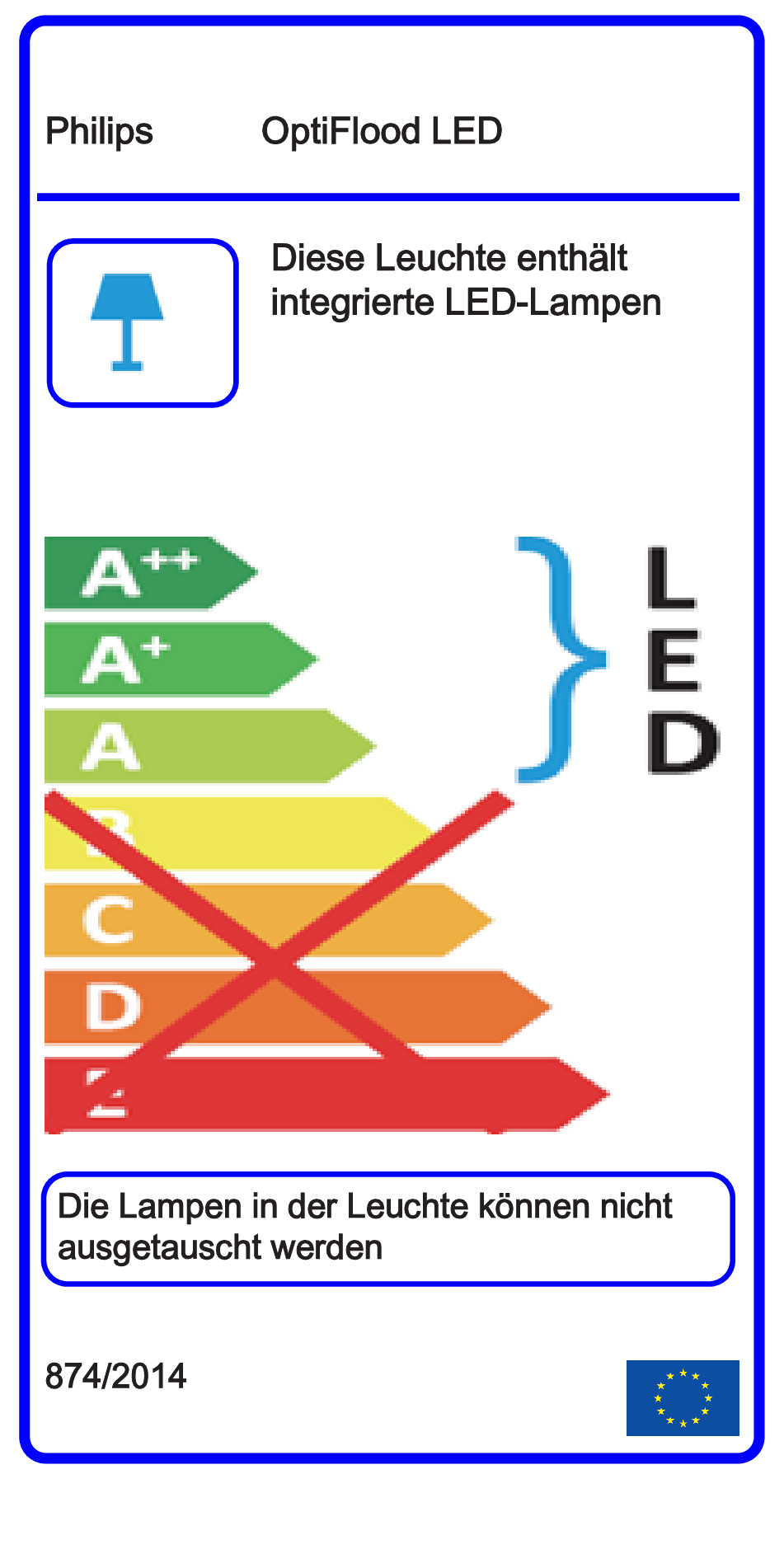
- A, A+, A++
- Ambient temperature (max)The maximum surrounding air temperature at which the unit can operate safely without risk of damage or failure, measured in degrees Celsius.
- 35 °C
- Ambient temperature (min)The lowest surrounding temperature at which the unit can operate safely and reliably, measured in degrees Celsius.
- -30 °C
Weight & dimensions
- WidthThe measurement or extent of something from side to side.
- 460 mm
- DepthThe distance from the front to the back of something.
- 730 mm
- HeightThe measurement of the product from head to foot or from base to top.
- 176 mm
- WeightWeight of the product without packaging (net weight). If possible, the net weight is given including standard accessories and supplies. Please note that sometimes the manufacturer leaves out the weight of accessories and/or supplies.
- 20 kg
Power
- Input voltageThe voltage (V) which is required to power the product.
- 220 - 240 V
- AC input frequencyThe range of alternating current frequencies the device can accept from the power source, measured in hertz (e.g., 45 - 65).
- 50 - 60 Hz
- AC input voltageThe voltage of the AC electricity that is inputted into the product.
- 220 - 240 V
- Inrush currentThe maximum peak current drawn by the device during the initial power-up phase, typically measured in Amperes.
- 53 A
- Inrush timeThe duration of the initial surge of current when the device is first powered on, typically measured in milliseconds or seconds.
- 0.3 ms
Performance
- Light colourThe colour of the light produced by the product.
- White
- Colour temperatureA method of describing the color characteristics of light, usually either warm (yellowish) or cool (bluish). Usually measured in degrees of Kelvin (°K).
- 5700 K
- Luminous fluxLuminous flux or luminous power is the measure of the perceived power of light measured in lumen. The luminous flux is a weighted sum of the power at all wavelengths in the visible band.
- 13159 lm
- Color Rendering Index (CRI)A quantitative measure of the ability to reveal the colors of various objects faithfully in comparison with an ideal or natural reference.
- 70
- Power factorThe ratio of the real power consumed by the device to the apparent power supplied to it, expressed as a value between 0 and 1.
- 0.9
- DimmableThe ability to vary the power output. For example, a light can be 'dimmed' to half power to make it less bright.
- No
Design
- Product colourThe colour e.g. red, blue, green, black, white.
- Grey
- Housing materialWhat the casing of the product is made of.
- Aluminium
- International Protection (IP) codeThe IP code classifies and rates the degree of protection provided against the intrusion (including body parts such as hands and fingers), dust, accidental contact, and water by mechanical casings and electrical enclosures. It is published by the International Electrotechnical Commission (IEC). The digits (characteristic numerals) indicate conformity with the conditions summarized in the tables b…
- IP66
- Protection classThe level of protection provided against electric shock, categorized by the design of the insulation and grounding (e.g., Class II).
- I
- IK codeThe international protection rating that specifies the degree of protection provided against the effects of an external mechanical impact (e.g. IK07).
- IK09
Database Right data-sheet 2026 Icecat. All rights reserved. Provided “as is”, without warranty — check details with the store before buying.
Price history (90 days, best daily price)
Price history is still being collected for this product — check back soon.
Alternative models

Philips 39913900 floodlight Black
28 W LED
Philips 39917700 floodlight Black
28 W LED

Philips 39918400 floodlight White
26.5 W LED

Philips 38601899 floodlight Black, Grey LED

Philips 40917300 floodlight Black
28 W LED

Philips 41171800 floodlight White
40 W LED