
LG 32CONFWF18 air conditioner Split system White
- Type: Split system
- Product colour: White
- Air conditioner functions: Cooling, Heating
- Inverter technology
- Outdoor unit sound power level: 65 dB
- Cooling airflow (outdoor unit): 2100 m³/h
Where to buy
We're not tracking prices for this product yet. Check current prices directly at:
We may earn a commission when you buy through links on this page — at no extra cost to you. Learn more
Documents
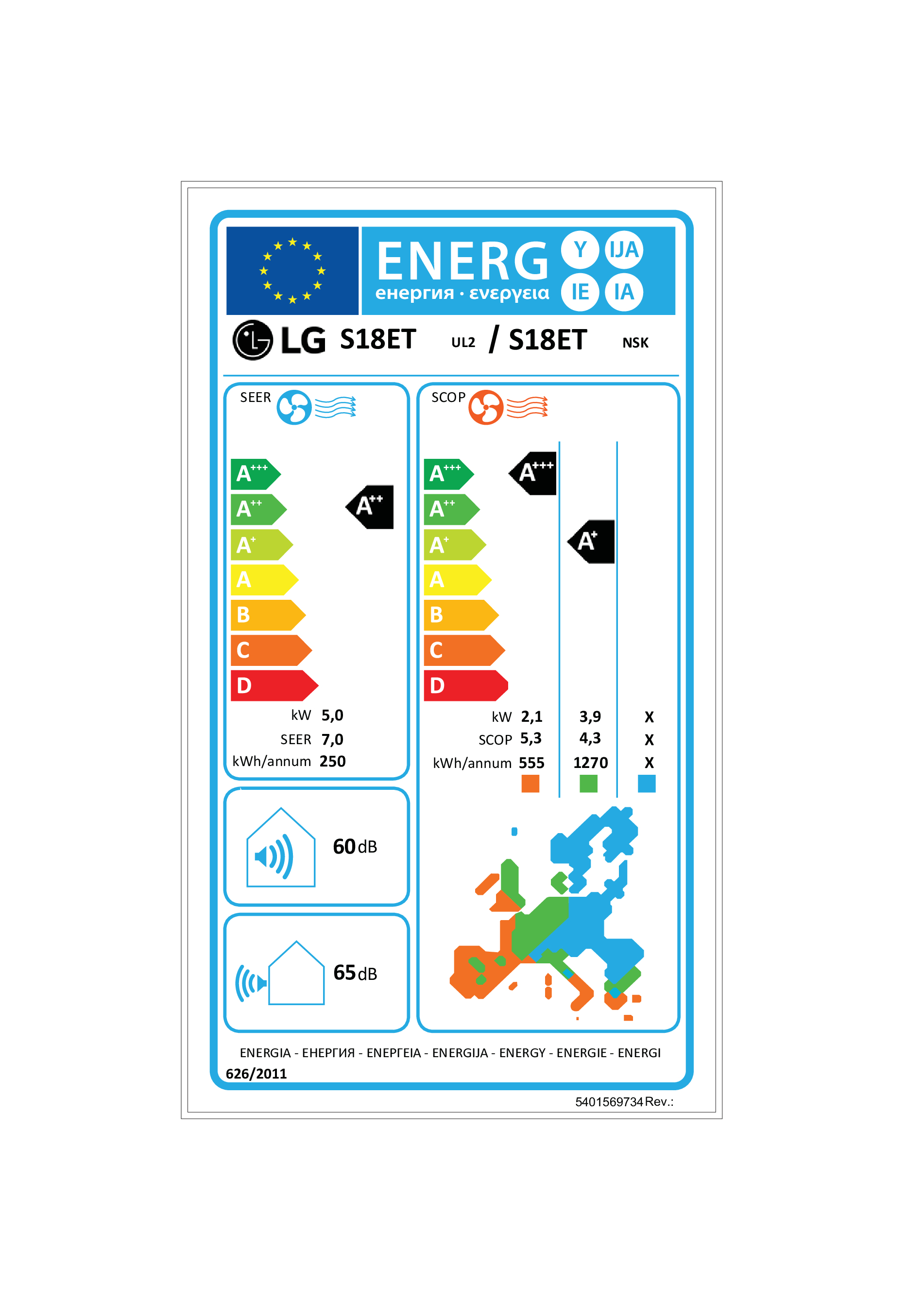
- Product information sheetEU Product Fiche ↗
Specifications
Key specifications
- TypeCharacteristics of the device.
- Split system
- Product colourThe colour e.g. red, blue, green, black, white.
- White
- Air conditioner functionsThe modes of the air conditioner e.g. heating, cooling.
- Cooling, Heating
- Inverter technologyAn “inverter” is a power conversion circuit that electronically regulates the voltage, current and frequency of products such as air conditioners.
- Yes
- Outdoor unit sound power levelThe total acoustic energy emitted by the external component of the system, measured in decibels (e.g. 55 dB).
- 65 dB
- Cooling airflow (outdoor unit)The volume of air moved by the outdoor unit fan during the cooling cycle, measured in cubic meters per hour (m³/h).
- 2100 m³/h
- Outdoor units quantityThe total number of external components included in the system.
- 1
- Outdoor unit widthThe measurement of the unit from side to side, expressed in millimetres or centimetres.
- 77 cm
- Outdoor unit depthThe measurement of the product from front to back, expressed in millimetres or centimetres.
- 28.8 cm
- Outdoor unit heightThe vertical measurement of the external component of the system, expressed in millimetres or centimetres.
- 54.5 cm
Show all 47 specificationsShow key specifications only
Features
- TypeCharacteristics of the device.
- Split system
- Air conditioner functionsThe modes of the air conditioner e.g. heating, cooling.
- Cooling, Heating
- Seasonal efficiency rating (cooling) (SEER)The Seasonal Energy Efficiency Ratio (SEER) is the cooling output during a typical cooling-season divided by the total electric energy input during the same period. The higher the unit's SEER rating the more energy efficient it is. In the U.S., the SEER is often measured as a ratio of British thermal units (BTU) to watt-hours.
- 7
- Seasonal efficiency rating (heating) (SCOP) (Warmer heating season)The seasonal coefficient of performance for heating in a warmer climate, representing the energy efficiency ratio over an entire heating season.
- 5.3
- Seasonal efficiency rating (heating) (SCOP) (Average heating season)The ratio of the total heat energy delivered by the device to the total electrical energy consumed during an entire heating season, based on average climate conditions.
- 4.3
- Cooling energy efficiency (EER, W/W)The ratio of the cooling capacity to the electrical power input, measured in watts per watt (W/W).
- 3.2
- Heating energy efficiency (COP, W/W)The ratio of heat energy delivered to the electrical energy consumed by the unit, expressed as watts per watt.
- 3.6
- Cooling capacity in watts (nominal)The amount of heat the unit can remove from a space under nominal operating conditions, measured in watts.
- 5000 W
- Cooling capacity in watts (min)The minimum amount of heat energy the unit can remove from a space, measured in watts.
- 900 W
- Cooling capacity in watts (max)The maximum amount of heat energy the unit can remove from a space or component, measured in watts.
- 5500 W
- Heating capacity in watts (nominal) (Average heating season)The average amount of thermal energy the unit can provide for heating during a typical heating season, measured in watts.
- 5800 W
- Heating capacity in watts (min)The minimum amount of thermal energy the unit can produce to warm a space, measured in watts.
- 900 W
- Heating capacity in watts (max)The maximum amount of thermal energy the unit can produce to warm a space, measured in watts.
- 6400 W
- Refrigerating medium weightThe total mass of the coolant gas used in the cooling system, measured in grams or kilograms.
- 1 kg
- Hose length (min)The minimum required length of the connecting piping between the indoor and outdoor units, measured in m.
- 3 m
- Hose length (max)The maximum permissible length of the connecting tube, measured in metres or millimetres.
- 20 m
- Operating temperature (cooling) (T-T)The range of ambient temperatures within which the device can operate effectively, measured in °C.
- -15 - 48 °C
- Operating temperature (heating) (T-T)The range of ambient temperatures, measured in degrees Celsius, within which the unit can effectively operate while in heating mode (e.g. -25°C to +18°C).
- -10 - 24 °C
Design
- Product colourThe colour e.g. red, blue, green, black, white.
- White
- Inverter technologyAn “inverter” is a power conversion circuit that electronically regulates the voltage, current and frequency of products such as air conditioners.
- Yes
- Refrigerating mediumThe type of refrigerant gas used to transfer heat (e.g., R600a or R290).
- R32
Outdoor unit
- Outdoor unit sound power levelThe total acoustic energy emitted by the external component of the system, measured in decibels (e.g. 55 dB).
- 65 dB
- Cooling airflow (outdoor unit)The volume of air moved by the outdoor unit fan during the cooling cycle, measured in cubic meters per hour (m³/h).
- 2100 m³/h
- Outdoor units quantityThe total number of external components included in the system.
- 1
- Outdoor unit widthThe measurement of the unit from side to side, expressed in millimetres or centimetres.
- 77 cm
- Outdoor unit depthThe measurement of the product from front to back, expressed in millimetres or centimetres.
- 28.8 cm
- Outdoor unit heightThe vertical measurement of the external component of the system, expressed in millimetres or centimetres.
- 54.5 cm
- Outdoor unit weightThe total mass of the external component, measured in g.
- 34.4 kg
Indoor unit
- Indoor unit typeThe physical design and mounting style of the internal component of the air conditioning system, such as wall-mountable or cassette.
- Wall-mountable
- Indoor unit noise level (low speed)The sound pressure level emitted by the indoor unit when operating at the lowest fan speed, measured in decibels (dB).
- 34 dB
- Indoor unit noise level (high speed)The sound pressure level emitted by the indoor unit when operating at its maximum fan speed, measured in decibels (dB).
- 44 dB
- Indoor unit sound power levelThe total acoustic energy emitted by the internal component, measured in decibels (dB).
- 60 dB
- Indoor units quantityThe total number of internal components or handsets included in the system.
- 1
- Indoor unit widthThe size of an indoor unit, measured from one side to another.
- 99.8 cm
- Indoor unit depthThe measurement of the device from front to back, expressed in millimetres or centimetres.
- 21 cm
- Indoor unit heightThe vertical measurement of the internal component of the system, expressed in millimetres.
- 34.5 cm
- Indoor unit weightThe total mass of the internal component of the system, measured in g.
- 11.9 kg
Network
- Wi-FiPopular technology that allows an electronic device to exchange data or connect to the internet wirelessly using radio waves.
- Yes
Power
- Energy efficiency class (heating) (Average heating season)The energy efficiency rating of the unit during the heating season, indicated by a scale of letter and plus symbols (e.g. A+++).
- A+
- Energy efficiency class (heating) (Warmer heating season)The energy efficiency rating of the air conditioning unit during the heating season in warmer climates, indicated by a scale such as A+++, A++, or A+.
- A+++
- Energy efficiency class (cooling) (legacy scale)This is a measure of the energy efficiency of the air conditioning (AC) when it is used to cool air. There are energy efficiency classes from A+++ to G, A+++ being the most energy efficient, G the least efficient.
- A++
- Annual energy consumption (cooling)This is a measure of the energy used in a year by the air conditioning (AC) when it is used to cool air.
- 250 kWh
- Annual energy consumption (heating) (Warmer heating season)The total amount of electricity used for heating purposes over a year based on a milder climate profile, measured in kilowatt-hours.
- 555 kWh
- Annual energy consumption (heating) (Average heating season)The estimated amount of electrical energy used for heating during a standard heating season, measured in kilowatt-hours.
- 1270 kWh
- Design load (heating) (Warmer heating season)The thermal output the unit provides during the heating cycle under warmer seasonal conditions, measured in kW.
- 2.1 kW
- Design load (heating) (Average heating season)The average amount of thermal energy required to maintain the desired indoor temperature during the heating season, measured in kilowatts.
- 3.9 kW
- Design load (heating) (Colder heating season)The thermal output the unit is designed to provide during the coldest part of the heating season, measured in kW.
- 5 kW
Database Right data-sheet 2026 Icecat. All rights reserved. Provided “as is”, without warranty — check details with the store before buying.
Price history (90 days, best daily price)
Price history is still being collected for this product — check back soon.
Alternative models
LG 32CONFWF12 air conditioner Split system White
Specs & where to buy

LG 32PURIFY12 air conditioner Split system White
Specs & where to buy
LG 32PURIFY09 air conditioner Split system White
Specs & where to buy

LG S3UW24K23BA air conditioner Air conditioner outdoor unit White
Specs & where to buy

LG 32GALLERY12 air conditioner Split system Multicolour
Specs & where to buy

LG S3NW24K23BA air conditioner Air conditioner indoor unit White
Specs & where to buy