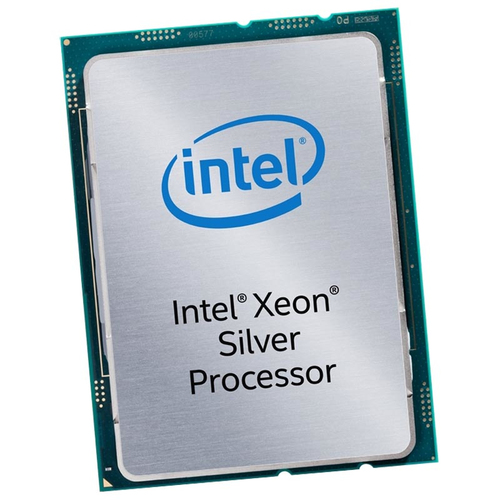
HP Intel Xeon Silver 4112 processor 2.6 GHz 8.25 MB L3
- Model: Intel Xeon Silver 4112
- Cores: 4 cores, 8 threads
- Speed: 2.6 GHz, up to 3 GHz
- Socket: LGA 3647 (Socket P)
- Cache: 8.25 MB
- Power (TDP): 85 W
Versions
 4112
 4122
5 model numbers for 4112
Where to buy
We're not tracking prices for this product yet. Check current prices directly at:
We may earn a commission when you buy through links on this page — at no extra cost to you. Learn more
Specifications
Key specifications
- Processor familyA family of processors is a group of processors produced by one company over a short period of time e.g. Intel Pentium processors.
- Intel Xeon Silver
- Processor modelThe model number for the processor in a computer.
- 4112
- Processor coresThe number of central processing units ('cores') in a processor. Some processors have 1 core, others have 2 (e.g. Intel Core Duo) or more (e.g. the Intel Xeon E7-2850 has 10 cores).
- 4
- Processor threadsThe number of virtual cores available for simultaneous processing tasks (e.g. 12 or 128).
- 8
- Processor base frequencyThe clock speed at which the core operates under normal conditions, measured in megahertz (MHz) or gigahertz (GHz).
- 2.6 GHz
- Processor boost frequencyThe turbo boost is an automatic, managed accelleration of the processor when one of the cores is overloaded.
- 3 GHz
- Processor socketMechanical component(s) that provides mechanical and electrical connections between a microprocessor and a printed circuit board (PCB). This allows the processor to be replaced without soldering.
- LGA 3647 (Socket P)
- Processor cacheThe amount of high-speed volatile memory integrated into the processor to reduce the average time to access data from the main memory, typically measured in megabytes (MB).
- 8.25 MB
- Thermal Design Power (TDP)The maximum amount of heat the product is expected to generate under a heavy workload, typically measured in Watts (W).
- 85 W
Show all 44 specificationsShow key specifications only
Graphics
- On-board graphics cardGraphics hardware which is built into the motherboard or CPU, as opposed to a separate graphics adapter (video card). On-board graphics uses CPU and RAM for graphics processing.
- No
Processor
- Processor familyA family of processors is a group of processors produced by one company over a short period of time e.g. Intel Pentium processors.
- Intel Xeon Silver
- Processor coresThe number of central processing units ('cores') in a processor. Some processors have 1 core, others have 2 (e.g. Intel Core Duo) or more (e.g. the Intel Xeon E7-2850 has 10 cores).
- 4
- Processor socketMechanical component(s) that provides mechanical and electrical connections between a microprocessor and a printed circuit board (PCB). This allows the processor to be replaced without soldering.
- LGA 3647 (Socket P)
- Processor lithographyThe process which is performed by the processor e.g. CPU (Central Processing Unit).
- 14 nm
- TcaseThe maximum temperature of the processor case before thermal throttling occurs, measured in degrees Celsius.
- 76 °C
- Maximum number of PCI Express lanesThe total number of high-speed data paths available for communication between the processor and peripheral components.
- 48
- PCI Express slots versionSpecifies the generation of the PCI Express standard supported by the expansion slots, which determines the available data transfer bandwidth (e.g., 4.0).
- 2.0
- Maximum internal memory supported by processorThe maximum amount of system RAM that the processor can address and utilize, typically measured in gigabytes (GB).
- 768 GB
- Memory types supported by processorThe specific standards of random access memory (RAM) that the processor is compatible with (e.g. DDR4-SDRAM, DDR5-SDRAM).
- DDR4-SDRAM
- Memory clock speeds supported by processorThe operational frequencies of the system memory that the processor can handle, typically measured in MHz (e.g. 1600).
- 2400 MHz
- Processor generationThe specific architectural version or series of the processor (e.g. 7th Gen).
- 1st Generation Intel Xeon Scalable
- Processor modelThe model number for the processor in a computer.
- 4112
- Processor base frequencyThe clock speed at which the core operates under normal conditions, measured in megahertz (MHz) or gigahertz (GHz).
- 2.6 GHz
- Processor threadsThe number of virtual cores available for simultaneous processing tasks (e.g. 12 or 128).
- 8
- Processor operating modesOperating modes for the processors that place restrictions on the type and scope of operations for certain processes run by the CPU. This design allows the operating system to run with more privileges than application software.
- 64-bit
- Processor boost frequencyThe turbo boost is an automatic, managed accelleration of the processor when one of the cores is overloaded.
- 3 GHz
- Processor cacheThe amount of high-speed volatile memory integrated into the processor to reduce the average time to access data from the main memory, typically measured in megabytes (MB).
- 8.25 MB
- Processor cache typeThe architecture level or specific technology of the high-speed memory integrated into the processor (e.g., L2 or Smart Cache).
- L3
- Thermal Design Power (TDP)The maximum amount of heat the product is expected to generate under a heavy workload, typically measured in Watts (W).
- 85 W
- SteppingThe smallest increment of change that can be adjusted or displayed, or the specific revision level of a component (e.g., 0.1 or 1).
- U0
- Processor codenameThe internal development name assigned by the manufacturer to the processor architecture (e.g., Alder Lake).
- Skylake
Processor special features
- Intel Hyper Threading Technology (Intel HT Technology)Improved Performance for Threaded Software Intel Hyper-Threading Technology (Intel HT Technology) makes efficient use of processor resources, enabling multiple threads to run on each core and increasing processor throughput. Available on Intel Core and Intel Xeon processors, Intel HT Technology helps run demanding applications simultaneously, protect and manage systems, and provide headroom for b…
- Yes
- Intel Turbo Boost TechnologyHigher Performance When You Need It Most Intel Turbo Boost Technology 2.0 accelerates processor and graphics performance by increasing the operating frequency when operating below specification limits. The maximum frequency varies depending on workload, hardware, software, and overall system configuration.
- 2.0
- Intel AES New Instructions (Intel AES-NI)Added Security with Faster Data Encryption The Intel Advanced Encryption Standard New Instructions (Intel AES-NI) enable fast and secure data encryption and decryption for better performance and less risk from timing and cache-based attacks than table-based software implementations. Intel AES-NI supports usages such as standard key lengths, standard modes of operation, and even some nonstandard o…
- Yes
- Enhanced Intel SpeedStep TechnologyIndicates whether the processor supports advanced power management to dynamically adjust frequency and voltage for energy efficiency.
- Yes
- Intel Trusted Execution TechnologyIndicates whether the processor supports hardware-based security features to protect the system from malicious software and unauthorized access.
- Yes
- Intel Speed Shift TechnologyIntel Speed Shift Technology uses hardware-controlled P-states to deliver dramatically quicker responsiveness with single-threaded, transient (short duration) workloads, such as web browsing, by allowing the processor to more quickly select its best operating frequency and voltage for optimal performance and power efficiency.
- Yes
- Intel VT-x with Extended Page Tables (EPT)Indicates whether the processor supports hardware-assisted virtualization and memory management to improve the performance of virtual machines.
- Yes
- Intel TSX-NIIndicates whether the processor supports Intel Transactional Synchronization Extensions New Instructions for improved multi-threaded performance.
- Yes
- Intel 64Indicates whether the processor supports the Intel 64 architecture for 64-bit computing.
- Yes
- Intel Virtualization Technology (VT-x)Simplify Virtualization and Reduce Overheads Intel Virtualization Technology (Intel VT) helps make virtualization practical by eliminating performance overheads, reducing complexity, and improving security with hardware assistance. Virtualization allows multiple workloads to share a common set of resources so that a variety of workloads can co-locate while maintaining full isolation from each oth…
- Yes
- Intel Virtualization Technology for Directed I/O (VT-d)Simplify Virtualization and Reduce Overheads Intel Virtualization Technology (Intel VT) helps make virtualization practical by eliminating performance overheads, reducing complexity, and improving security with hardware assistance. Virtualization allows multiple workloads to share a common set of resources so that a variety of workloads can co-locate while maintaining full isolation from each oth…
- Yes
- Conflict-Free processor"Conflict free" means "DRC conflict free", which is defined by the U.S. Securities and Exchange Commission rules to mean products that do not contain conflict minerals (tin, tantalum, tungsten and/or gold) that directly or indirectly finance or benefit armed groups in the Democratic Republic of the Congo (DRC) or adjoining countries.
- Yes
- Intel Turbo Boost Max Technology 3.0Indicates whether the product supports a technology that dynamically increases the clock speed of the fastest cores to improve single-threaded performance.
- No
- Intel Optane Memory ReadyIndicates whether the system supports Intel Optane persistent memory modules to expand the available system memory capacity.
- No
- Execute Disable BitIndicates whether the processor supports a security feature that marks certain areas of memory as non-executable to prevent malicious code from running.
- Yes
- ScalabilitySpecifies the maximum number of physical processors that can be installed in the unit (e.g., 2S for dual-socket).
- 2S
- Embedded options availableIndicates whether the product is available in a version designed for integration into a larger system or industrial application.
- No
Design
- Intel vPro Platform EligibilityIndicates whether the hardware meets the requirements to support Intel vPro technology for enhanced manageability, security, and stability.
- Yes
Features
- Market segmentThe target group or industry classification for which the product is intended (e.g. Business or Consumer).
- Server
- Component forWhat this product is used as a part of (component for).
- Server/workstation
Memory
- Memory channelsThe number of communication paths between the memory controller and the RAM, which affects data transfer bandwidth (e.g., Dual-channel).
- Hexa-channel
- ECCECC means Error Correction Code, and it is memory that is able to detect and correct some memory errors without user intervention.
- Yes
Database Right data-sheet 2026 Icecat. All rights reserved. Provided “as is”, without warranty — check details with the store before buying.
Price history (90 days, best daily price)
Price history is still being collected for this product — check back soon.
Alternative models

HP Intel Xeon Silver 4114 processor 2.2 GHz
13.75 MB L3
Specs & where to buy
HP Intel Xeon Silver 4108 processor 1.8 GHz
11 MB L3
Specs & where to buy
HP Intel Xeon Silver 4116 processor 2.1 GHz
16.5 MB L3
Specs & where to buy

HP Intel Xeon Bronze 3106 processor 1.7 GHz
11 MB L3
Specs & where to buy

HP Intel Xeon Gold 5118 processor 2.3 GHz
16.5 MB L3
Specs & where to buy

HP Intel Xeon Bronze 3104 processor 1.7 GHz
8.25 MB L3
Specs & where to buy