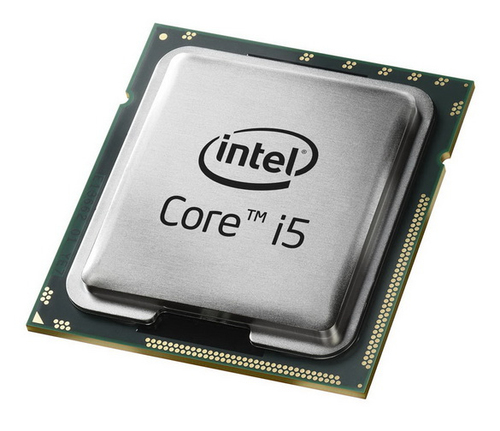
HP B0T08AV processor 2.5 GHz 6 MB L3
- Model: Intel Core i5 i5-2400S
- Cores: 4 cores, 4 threads
- Speed: 2.5 GHz, up to 3.3 GHz
- Socket: LGA 1155 (Socket H2)
- Cache: 6 MB
- Power (TDP): 65 W
- Included: built-in graphics
Where to buy
We're not tracking prices for this product yet. Check current prices directly at:
We may earn a commission when you buy through links on this page — at no extra cost to you. Learn more
About this product
Intel Quick Sync Video
Intel Quick Sync Video delivers fast conversion of video for portable media players, online sharing, and video editing and authoring.
Intel InTru 3D Technology
Intel InTru 3D Technology provides stereoscopic 3-D Blu-ray playback in full 1080p resolution over HDMI 1.4 and premium audio.
Intel Insider
Intel Insider delivers premium HD content to an UltrabookTM or PC.
Intel Flexible Display Interface (Intel FDI)
The Intel Flexible Display Interface is an innovative path for two independently controlled channels of integrated graphics to be displayed.
Intel Clear Video HD Technology
Intel Clear Video HD Technology delivers High Definition quality playback so that you can experience movies and games like never before.
Intel Turbo Boost Technology
Intel Turbo Boost Technology dynamically increases the processor's frequency as needed by taking advantage of thermal and power headroom to give you a burst of speed when you need it, and increased energy efficiency when you don’t.
Intel Virtualization Technology (VT-x)
Intel Virtualization Technology (VT-x) allows one hardware platform to function as multiple “virtual” platforms. It offers improved manageability by limiting downtime and maintaining productivity by isolating computing activities into separate partitions.
Intel Virtualization Technology for Directed I/O (VT-d)
Intel Virtualization Technology for Directed I/O (VT-d) continues from the existing support for IA-32 (VT-x) and Itanium processor (VT-i) virtualization adding new support for I/O-device virtualization. Intel VT-d can help end users improve security and reliability of the systems and also improve performance of I/O devices in virtualized environments.
Intel Trusted Execution Technology
Intel Trusted Execution Technology for safer computing is a versatile set of hardware extensions to Intel processors and chipsets that enhance the digital office platform with security capabilities such as measured launch and protected execution. It enables an environment where applications can run within their own space, protected from all other software on the system.
AES New Instructions
Advanced Encryption Standard New Instructions (AES-NI) are a set of instructions that enable fast and secure data encryption and decryption. AES-NI are valuable for a wide range of cryptographic applications, for example: applications that perform bulk encryption/decryption, anthentication, random number generation, and authenticated encryption.
Intel 64
Intel 64 architecture delivers 64-bit computing on server, workstation, desktop and mobile platforms when combined with supporting software.¹ Intel 64 architecture improves performance by allowing systems to address more than 4 GB of both virtual and physical memory.
Idle States
Idle States (C-states) are used to save power when the processor is idle. C0 is the operational state, meaning that the CPU is doing useful work. C1 is the first idle state, C2 the second, and so on, where more power saving actions are taken for numerically higher C-states.
Enhanced Intel SpeedStep Technology
Enhanced Intel SpeedStep Technology is an advanced means of enabling high performance while meeting the power-conservation needs of mobile systems. Conventional Intel SpeedStep Technology switches both voltage and frequency in tandem between high and low levels in response to processor load. Enhanced Intel SpeedStep Technology builds upon that architecture using design strategies such as Separation between Voltage and Frequency Changes, and Clock Partitioning and Recovery.
Thermal Monitoring Technologies
Thermal Monitoring Technologies protect the processor package and the system from thermal failure through several thermal management features. An on-die Digital Thermal Sensor (DTS) detects the core's temperature, and the thermal management features reduce package power consumption and thereby temperature when required in order to remain within normal operating limits
Intel Fast Memory Access
Intel Fast Memory Access is an updated Graphics Memory Controller Hub (GMCH) backbone architecture that improves system performance by optimizing the use of available memory bandwidth and reducing the latency of the memory accesses.
Intel Flex Memory Access
Intel Flex Memory Access facilitates easier upgrades by allowing different memory sizes to be populated and remain in dual-channel mode.
Execute Disable Bit
Execute Disable Bit is a hardware-based security feature that can reduce exposure to viruses and malicious-code attacks and prevent harmful software from executing and propagating on the server or network.
Intel VT-x with Extended Page Tables (EPT)
Intel VT-x with Extended Page Tables (EPT), also known as Second Level Address Translation (SLAT), provides acceleration for memory intensive virtualized applications. Extended Page Tables in Intel Virtualization Technology platforms reduces the memory and power overhead costs and increases battery life through hardware optimization of page table management.
Specifications
Key specifications
- Processor familyA family of processors is a group of processors produced by one company over a short period of time e.g. Intel Pentium processors.
- Intel Core i5
- Processor modelThe model number for the processor in a computer.
- i5-2400S
- Processor coresThe number of central processing units ('cores') in a processor. Some processors have 1 core, others have 2 (e.g. Intel Core Duo) or more (e.g. the Intel Xeon E7-2850 has 10 cores).
- 4
- Processor threadsThe number of virtual cores available for simultaneous processing tasks (e.g. 12 or 128).
- 4
- Processor base frequencyThe clock speed at which the core operates under normal conditions, measured in megahertz (MHz) or gigahertz (GHz).
- 2.5 GHz
- Processor boost frequencyThe turbo boost is an automatic, managed accelleration of the processor when one of the cores is overloaded.
- 3.3 GHz
- Processor socketMechanical component(s) that provides mechanical and electrical connections between a microprocessor and a printed circuit board (PCB). This allows the processor to be replaced without soldering.
- LGA 1155 (Socket H2)
- Processor cacheThe amount of high-speed volatile memory integrated into the processor to reduce the average time to access data from the main memory, typically measured in megabytes (MB).
- 6 MB
- Thermal Design Power (TDP)The maximum amount of heat the product is expected to generate under a heavy workload, typically measured in Watts (W).
- 65 W
- On-board graphics cardGraphics hardware which is built into the motherboard or CPU, as opposed to a separate graphics adapter (video card). On-board graphics uses CPU and RAM for graphics processing.
- Yes
Show all 55 specificationsShow key specifications only
Graphics
- On-board graphics cardGraphics hardware which is built into the motherboard or CPU, as opposed to a separate graphics adapter (video card). On-board graphics uses CPU and RAM for graphics processing.
- Yes
- On-board graphics card model"Graphic adapter" is the hardware that produces images on a display. "On-board" means that the graphics adapter is intergrated inside the motherboard.
- Intel HD Graphics 2000
- On-board graphics card base frequencyThe minimum clock speed at which the integrated graphics processor operates, measured in megahertz (MHz) or gigahertz (GHz).
- 850 MHz
- On-board graphics card dynamic frequency (max)The maximum clock speed reached by the integrated graphics processor, measured in MHz.
- 1100 MHz
- Number of displays supported (on-board graphics)The feature may not be available on all computing systems. Functionality, performance, and other benefits of this feature may vary depending on system configuration.
- 2
Processor
- Processor familyA family of processors is a group of processors produced by one company over a short period of time e.g. Intel Pentium processors.
- Intel Core i5
- Processor coresThe number of central processing units ('cores') in a processor. Some processors have 1 core, others have 2 (e.g. Intel Core Duo) or more (e.g. the Intel Xeon E7-2850 has 10 cores).
- 4
- Processor socketMechanical component(s) that provides mechanical and electrical connections between a microprocessor and a printed circuit board (PCB). This allows the processor to be replaced without soldering.
- LGA 1155 (Socket H2)
- Processor lithographyThe process which is performed by the processor e.g. CPU (Central Processing Unit).
- 32 nm
- TcaseThe maximum temperature of the processor case before thermal throttling occurs, measured in degrees Celsius.
- 69.1 °C
- Maximum number of PCI Express lanesThe total number of high-speed data paths available for communication between the processor and peripheral components.
- 16
- PCI Express slots versionSpecifies the generation of the PCI Express standard supported by the expansion slots, which determines the available data transfer bandwidth (e.g., 4.0).
- 2.0
- Maximum internal memory supported by processorThe maximum amount of system RAM that the processor can address and utilize, typically measured in gigabytes (GB).
- 32 GB
- Memory types supported by processorThe specific standards of random access memory (RAM) that the processor is compatible with (e.g. DDR4-SDRAM, DDR5-SDRAM).
- DDR3-SDRAM
- Memory clock speeds supported by processorThe operational frequencies of the system memory that the processor can handle, typically measured in MHz (e.g. 1600).
- 1066,1333 MHz
- Processor generationThe specific architectural version or series of the processor (e.g. 7th Gen).
- 2nd gen Intel Core i5
- Processor modelThe model number for the processor in a computer.
- i5-2400S
- Processor base frequencyThe clock speed at which the core operates under normal conditions, measured in megahertz (MHz) or gigahertz (GHz).
- 2.5 GHz
- Processor threadsThe number of virtual cores available for simultaneous processing tasks (e.g. 12 or 128).
- 4
- System bus rateA bus is a communication system that transfers data between components inside a computer, or between computers. The system bus rate is the speed at which data is transferred in this communication system.
- 5 GT/s
- Processor operating modesOperating modes for the processors that place restrictions on the type and scope of operations for certain processes run by the CPU. This design allows the operating system to run with more privileges than application software.
- 64-bit
- Processor boost frequencyThe turbo boost is an automatic, managed accelleration of the processor when one of the cores is overloaded.
- 3.3 GHz
- Processor cacheThe amount of high-speed volatile memory integrated into the processor to reduce the average time to access data from the main memory, typically measured in megabytes (MB).
- 6 MB
- Processor cache typeThe architecture level or specific technology of the high-speed memory integrated into the processor (e.g., L2 or Smart Cache).
- L3
- Thermal Design Power (TDP)The maximum amount of heat the product is expected to generate under a heavy workload, typically measured in Watts (W).
- 65 W
- CPU multiplier (bus/core ratio)The ratio used to determine the actual clock speed of the processor relative to the front side bus frequency.
- 25
- Memory bandwidth supported by processor (max)The maximum rate at which data can be read from or stored into the memory by the processor, measured in gigabytes per second (GB/s).
- 21 GB/s
Processor special features
- Intel Virtualization Technology (Intel VT)Simplify Virtualization and Reduce Overheads Intel Virtualization Technology (Intel VT) helps make virtualization practical by eliminating performance overheads, reducing complexity, and improving security with hardware assistance. Virtualization allows multiple workloads to share a common set of resources so that a variety of workloads can co-locate while maintaining full isolation from each oth…
- VT-d, VT-x
- Processor package sizeThe physical dimensions of the processor housing, measured in mm.
- 37.5 mm
- Intel Turbo Boost TechnologyHigher Performance When You Need It Most Intel Turbo Boost Technology 2.0 accelerates processor and graphics performance by increasing the operating frequency when operating below specification limits. The maximum frequency varies depending on workload, hardware, software, and overall system configuration.
- 2.0
- Intel Quick Sync Video TechnologyCreate, Edit, and Share Video in a Flash Intel Quick Sync Video uses the dedicated media processing capabilities of Intel Graphics Technology to make video encoding tasks—such as creating DVDs or Blu-ray discs, creating and editing 3D videos, converting 2D video files into 3D, and converting video for portable media players and social networking sites—faster and easier.
- Yes
- Intel InTru 3D TechnologyAdd a new dimension to your viewing experience. Now you can play games and watch your favorite 3D movies with Blu-ray Stereo 3D playback using passive or active shutter 3D glasses. InTru 3D technology by Intel in association with Dreamworks delivers it all in 1080p full high-definition resolution on your TV over HDMI 1.4.
- Yes
- Intel FDI TechnologyIndicates whether the product supports Fast Direct I/O, which provides a high-speed interface for faster communication between the processor and the chipset.
- Yes
- Intel Clear Video HD Technology (Intel CVT HD)See the World More Vividly Intel Clear Video HD Technology delivers cleaner, sharper images, more natural, accurate, and vivid colors. View images as they were meant to be seen on devices featuring Intel Core processors with Intel Graphics Technology.
- Yes
- Intel Dual Display Capable TechnologyIndicates whether the product supports the simultaneous use of two separate displays using the integrated graphics controller.
- Yes
- Intel InsiderExperience a whole new level of premium HD entertainment with Intel Insider—available exclusively with 5th generation Intel Core processors.
- Yes
- Intel Fast Memory AccessIndicates whether the product supports Intel Fast Memory Access to reduce latency and improve performance for memory-intensive applications.
- Yes
- Intel Flex Memory AccessIndicates whether the processor supports the ability to operate with memory modules of different capacities or speeds.
- Yes
- Intel Smart CacheImprove Responsiveness with Faster Data Access With Intel Smart Cache on the Intel Core i5 processor, the shared cache is dynamically allocated to each processor core, based on workload. This efficient, dual-core-optimized implementation increases the probability that each core can access data from the fast cache, significantly reducing latency to frequently used data and improving performance.
- Yes
- Intel AES New Instructions (Intel AES-NI)Added Security with Faster Data Encryption The Intel Advanced Encryption Standard New Instructions (Intel AES-NI) enable fast and secure data encryption and decryption for better performance and less risk from timing and cache-based attacks than table-based software implementations. Intel AES-NI supports usages such as standard key lengths, standard modes of operation, and even some nonstandard o…
- Yes
- Enhanced Intel SpeedStep TechnologyIndicates whether the processor supports advanced power management to dynamically adjust frequency and voltage for energy efficiency.
- Yes
- Intel Trusted Execution TechnologyIndicates whether the processor supports hardware-based security features to protect the system from malicious software and unauthorized access.
- Yes
- Intel VT-x with Extended Page Tables (EPT)Indicates whether the processor supports hardware-assisted virtualization and memory management to improve the performance of virtual machines.
- Yes
- Intel Virtualization Technology (VT-x)Simplify Virtualization and Reduce Overheads Intel Virtualization Technology (Intel VT) helps make virtualization practical by eliminating performance overheads, reducing complexity, and improving security with hardware assistance. Virtualization allows multiple workloads to share a common set of resources so that a variety of workloads can co-locate while maintaining full isolation from each oth…
- Yes
- Intel Virtualization Technology for Directed I/O (VT-d)Simplify Virtualization and Reduce Overheads Intel Virtualization Technology (Intel VT) helps make virtualization practical by eliminating performance overheads, reducing complexity, and improving security with hardware assistance. Virtualization allows multiple workloads to share a common set of resources so that a variety of workloads can co-locate while maintaining full isolation from each oth…
- Yes
- Execute Disable BitIndicates whether the processor supports a security feature that marks certain areas of memory as non-executable to prevent malicious code from running.
- Yes
- Idle StatesIndicates whether the processor supports power-saving modes that reduce energy consumption during periods of inactivity.
- Yes
- Thermal Monitoring TechnologiesIndicates whether the processor incorporates integrated sensors and logic to monitor operating temperatures and prevent overheating.
- Yes
- Supported instruction setsSpecifies the hardware acceleration technologies and architectural extensions supported by the processor to optimize specific tasks, such as AVX for floating-point calculations or AES-NI for encryption.
- AVX, SSE4.1, SSE4.2
- CPU configuration (max)The maximum number of central processing units that can be installed or supported by the system.
- 1
Design
- Intel vPro Platform EligibilityIndicates whether the hardware meets the requirements to support Intel vPro technology for enhanced manageability, security, and stability.
- Yes
Features
- Market segmentThe target group or industry classification for which the product is intended (e.g. Business or Consumer).
- Desktop
- Component forWhat this product is used as a part of (component for).
- PC
Memory
- Memory channelsThe number of communication paths between the memory controller and the RAM, which affects data transfer bandwidth (e.g., Dual-channel).
- Dual-channel
- ECCECC means Error Correction Code, and it is memory that is able to detect and correct some memory errors without user intervention.
- No
Database Right data-sheet 2026 Icecat. All rights reserved. Provided “as is”, without warranty — check details with the store before buying.
Price history (90 days, best daily price)
Price history is still being collected for this product — check back soon.
Alternative models

HP Intel Pentium G850 processor 2.9 GHz
3 MB L3

HP B0T07AV processor 3.3 GHz
3 MB L3 Tray

HP Intel Celeron G550 processor 2.6 GHz
2 MB L3

HP B0T06AV processor 2.5 GHz
2 MB L3

HP Intel Core i3-3220 processor 3.3 GHz
3 MB L3 Tray

HP Intel Core i5-3570 processor 3.4 GHz
6 MB L3