
DELL PowerEdge per910 server 146 GB Rack (4U) Intel Xeon E7 Family E7-4820 2 GHz 32 GB DDR3-SDRAM
- Processor: Intel Xeon E7 Family E7-4820, 8 cores
- Memory: 32 GB DDR3-SDRAM
- Storage: 146 GB
- Chassis: Rack (4U)
Where to buy
We're not tracking prices for this product yet. Check current prices directly at:
We may earn a commission when you buy through links on this page — at no extra cost to you. Learn more
About this product
Dell PowerEdge R910 4U rack server
The PowerEdge R910 is an Intel processor-based 4-socket, 4U rack server for mission-critical applications in corporate data centers and workloads needing the highest performance, reliability and I/O scalability.
Purpose-Built with a Focus on Reliability
Dell customers have told us they need a server manufacturer that inspires confidence through its reliability, availability and quality of products. By listening to and focusing on what customers want, we’ve set a simple reliability goal: Deliver quality over time.
Purpose-Built with a Focus on Reliability
We’ve designed the Dell PowerEdge R910 for reliability, incorporating features such as Intel advanced reliability, availability and serviceability (RAS) capabilities; redundant power supplies; remote IDRAC6 connectivity; and embedded diagnostics. Internal Dual SD Module provides failover at the hyperviso r— a reliability feature designed with direct input from Dell customers.
Our focus on reliability starts with product design and ends only when we’ve delivered by following a proven set of processes with rigorous validation. With the PowerEdge R910, we work to ensure reliability through:
- Employing robust validation and testing processes to ensure peerless product design;
- Verifying that each supplier meets Dell’s stringent quality standards;
- Utilizing robust, durable industrial materials to enable longer product lifecycles;
- Introducing a Unified Server Configurator (USC), which helps to minimize downtime by offering embedded and persistent diagnostics with no media required;
- Incorporating customer-inspired features, such as dual internal SD modules that provide failover at the hypervisor;
- Implementing a "one-touch" quality-control process designed to ensure that one person is responsible for the entire server build;
- Ensuring that every fully configured Dell server is tested — and retested — before it leaves the factory.
Intelligent Platforms, Connected Foundations
By listening to and focusing on our customers, Dell delivers innovation that matters and value that lasts.
Virtualization, consolidation, unifying fabrics, networking and storage upgrades are driving the need for more robust network pipes, and servers have to be able to provide the connectivity to drive this need for bandwidth. The PowerEdge R910 is available with a 2x10GbB LOM option to meet those demands. This delivers the bandwidth for applications and value without limiting scalability by integrating 10Gb capabilities on a riser.
A Complete Management Portfolio
The PowerEdge R910 is simple to deploy, manage and maintain, saving you time and money to focus on what matters most—your people and business.
Intelligent Platforms, Connected Foundations
Dell systems-management solutions focus on simplicity, efficiency, cost containment and reduction, as well as an adherence to open standards. Our solutions are complemented by, connected to, and integrated with third-party offerings to provide a holistic focus across the solutions stack.
Intelligent Platforms, Connected Foundations
Integrated on the server, the Lifecycle Controller chip helps to simplify administrator tasks by performing a complete set of provisioning functions such as system deployment, system updates, hardware configuration, and diagnostics in a pre-OS environment—all from a single, intuitive interface called the Unified Server Configurator (USC). This eliminates the need to use and maintain multiple pieces of disparate CD/DVD media.
Intelligent Platforms, Connected Foundations
Also part of Dell’s systems-management portfolio is the Dell Management Console, part of the OpenManage software that ships free with every Dell server and provides IT managers with a consolidated view of their entire IT infrastructure.
Efficient Infrastructure
Customers can build an efficient and scalable server infrastructure with standard x86 server technologies. The PowerEdge R910 is the building block for a standard efficient infrastructure.
- Dell’s focus is on helping customers reduce cost with a server created to help simplify daily operations, maximize infrastructure, and streamline deployment;
- Dell LifeCycle Controller was developed to help customers implement an effective process for deployment and comprehensive server management;
- This Dell innovation allows customers to simplify initial set up and configuration of new servers by auto-discovery and initial security configuration of system service processor with the already collected and available drivers, helping reduce time and potential error or disruption.
Dell provides choice with open standard server solutions based on Intel Xeon architecture combined with Linux , and providing all the required characteristics—performance, scalability, reliability, security, and support options to help reduce data center operations costs.
The PowerEdge R910 is in line with the 11th Generation PowerEdge portfolio behavioral specifications featuring the same system design commonality and serviceability true to the entire portfolio. Dell PowerEdge servers are engineered with all external ports, power supplies, and LED lights in the same location for familiar user experience, as well as easy installation and deployment.
Dell provides a server foundation giving customers the peace of mind and quiet confidence to run their businesses.
Specifications
Key specifications
- Processor familyA family of processors is a group of processors produced by one company over a short period of time e.g. Intel Pentium processors.
- Intel Xeon E7 Family
- Processor modelThe model number for the processor in a computer.
- E7-4820
- Processor coresThe number of central processing units ('cores') in a processor. Some processors have 1 core, others have 2 (e.g. Intel Core Duo) or more (e.g. the Intel Xeon E7-2850 has 10 cores).
- 8
- Internal memoryThe amount of memory, usually measured in bytes (e.g. MB, GB), which is installed in the system's hardware.
- 32 GB
- Internal memory typeThe type of internal memory such as RAM, GDDR5.
- DDR3-SDRAM
- Total storage capacityThe total amount of data that can be stored on the device.
- 146 GB
- Chassis typeThe type of rigid framework onto which is the hosuing for device components.
- Rack (4U)
Show all 99 specificationsShow key specifications only
Design
- Chassis typeThe type of rigid framework onto which is the hosuing for device components.
- Rack (4U)
Memory
- Internal memoryThe amount of memory, usually measured in bytes (e.g. MB, GB), which is installed in the system's hardware.
- 32 GB
- Internal memory typeThe type of internal memory such as RAM, GDDR5.
- DDR3-SDRAM
- Memory slotsNumber and type of memory expansion slots, including connector and memory module descriptions.
- 64x DIMM
- ECCECC means Error Correction Code, and it is memory that is able to detect and correct some memory errors without user intervention.
- Yes
- Memory clock speedThe frequency at which the memory (e.g. RAM) runs.
- 1066 MHz
- Memory layout (slots x size)The slots and size of the memory for the CPU.
- 16 x 2 GB
- Maximum internal memoryThe maximum amount of memory inside a product, usually measured in bytes e.g megabytes (MB) or gigabytes (GB).
- 2 TB
Processor
- Processor familyA family of processors is a group of processors produced by one company over a short period of time e.g. Intel Pentium processors.
- Intel Xeon E7 Family
- Processor manufacturerThe manufacturer that produced the processor.
- Intel
- Processor modelThe model number for the processor in a computer.
- E7-4820
- Processor frequencyThe clock rate is the fundamental rate in cycles per second (measured in hertz) at which a computer performs its most basic operations such as adding two numbers. There are more factors, like internal memory size, that influence a computer's actual response time.
- 2 GHz
- Processor boost frequencyThe turbo boost is an automatic, managed accelleration of the processor when one of the cores is overloaded.
- 2.27 GHz
- Processor coresThe number of central processing units ('cores') in a processor. Some processors have 1 core, others have 2 (e.g. Intel Core Duo) or more (e.g. the Intel Xeon E7-2850 has 10 cores).
- 8
- Processor cacheThe amount of high-speed volatile memory integrated into the processor to reduce the average time to access data from the main memory, typically measured in megabytes (MB).
- 18 MB
- Memory channels supported by processorThe number of communication paths between the memory controller and the RAM, which affects data transfer bandwidth (e.g. Dual or Quad).
- Quad
- Number of processors installedNumber of processors in the product.
- 2
- Thermal Design Power (TDP)The maximum amount of heat the product is expected to generate under a heavy workload, typically measured in Watts (W).
- 105 W
- Processor cache typeThe architecture level or specific technology of the high-speed memory integrated into the processor (e.g., L2 or Smart Cache).
- Smart Cache
- System bus rateA bus is a communication system that transfers data between components inside a computer, or between computers. The system bus rate is the speed at which data is transferred in this communication system.
- 5.86 GT/s
- Maximum number of SMP processorsThe highest number of symmetric multiprocessing (SMP) processors that the system can support.
- 2
- Processor socketMechanical component(s) that provides mechanical and electrical connections between a microprocessor and a printed circuit board (PCB). This allows the processor to be replaced without soldering.
- LGA 1567 (Socket LS)
- Processor lithographyThe process which is performed by the processor e.g. CPU (Central Processing Unit).
- 32 nm
- Processor threadsThe number of virtual cores available for simultaneous processing tasks (e.g. 12 or 128).
- 16
- Processor operating modesOperating modes for the processors that place restrictions on the type and scope of operations for certain processes run by the CPU. This design allows the operating system to run with more privileges than application software.
- 64-bit
- SteppingThe smallest increment of change that can be adjusted or displayed, or the specific revision level of a component (e.g., 0.1 or 1).
- A2
- FSB ParityIndicates whether the device supports error detection on the Front Side Bus to ensure data integrity during transmission between the processor and the memory controller.
- No
- Bus typeThe communication interface used for data transfer between internal components, such as the CPU and chipset (e.g., QPI, DMI).
- QPI
- Processor codenameThe internal development name assigned by the manufacturer to the processor architecture (e.g., Alder Lake).
- Westmere EX
- TcaseThe maximum temperature of the processor case before thermal throttling occurs, measured in degrees Celsius.
- 64 °C
- Maximum internal memory supported by processorThe maximum amount of system RAM that the processor can address and utilize, typically measured in gigabytes (GB).
- 2 TB
- Memory types supported by processorThe specific standards of random access memory (RAM) that the processor is compatible with (e.g. DDR4-SDRAM, DDR5-SDRAM).
- DDR3-SDRAM
- Memory clock speeds supported by processorThe operational frequencies of the system memory that the processor can handle, typically measured in MHz (e.g. 1600).
- 800,978,1066,1333 MHz
- ECC supported by processorIndicates whether the processor supports Error Correction Code memory to detect and fix internal data corruption.
- Yes
- CPU multiplier (bus/core ratio)The ratio used to determine the actual clock speed of the processor relative to the front side bus frequency.
- 15
- Processor seriesThe specific family or generation of the processor, such as the AMD EPYC 9004 Series or 9th Generation Intel Core i5.
- Intel Xeon E7-4800
Graphics
- Graphics cardThe specific hardware component responsible for rendering images and video, such as the AMD Radeon 860M.
- G200eW
- Graphics card familyThe manufacturer or architectural series of the integrated or discrete graphics processing unit (e.g. AMD, Adreno, Apple).
- Matrox
- Maximum graphics card memoryThe highest amount of dedicated video RAM that the device can support or utilize, measured in gigabytes (GB) or megabytes (MB).
- 8 MB
Weight & dimensions
- WidthThe measurement or extent of something from side to side.
- 482 mm
- DepthThe distance from the front to the back of something.
- 753 mm
- HeightThe measurement of the product from head to foot or from base to top.
- 172.6 mm
Processor special features
- CPU configuration (max)The maximum number of central processing units that can be installed or supported by the system.
- 4
- Intel Rapid Storage TechnologyIndicates whether the product supports Intel's driver and software framework for optimizing storage performance and enabling RAID configurations.
- No
- Enhanced Intel SpeedStep TechnologyIndicates whether the processor supports advanced power management to dynamically adjust frequency and voltage for energy efficiency.
- Yes
- Intel Wireless Display (Intel WiDi)Connect to TV Wirelessly With a few clicks, Intel Wireless Display expands your screen’s potential, linking mobile devices and laptops to TV screens wirelessly. Stream family favorites and view personal experiences while turning your device’s small screen into a superior, sharable experience.
- No
- Intel Virtualization Technology for Directed I/O (VT-d)Simplify Virtualization and Reduce Overheads Intel Virtualization Technology (Intel VT) helps make virtualization practical by eliminating performance overheads, reducing complexity, and improving security with hardware assistance. Virtualization allows multiple workloads to share a common set of resources so that a variety of workloads can co-locate while maintaining full isolation from each oth…
- Yes
- Intel Anti-Theft Technology (Intel AT)Disable access to missing laptops Giving users access to corporate data and application through remote laptops boosts productivity, but it can also leave IT vulnerable to hackers and misplaced laptops. Intel Anti-Theft Technology is built into the laptop hardware, helping IT administrators outwit thieves, even when they attempt to reimage the OS, change the boot order, or install a new hard drive…
- No
- Intel Hyper Threading Technology (Intel HT Technology)Improved Performance for Threaded Software Intel Hyper-Threading Technology (Intel HT Technology) makes efficient use of processor resources, enabling multiple threads to run on each core and increasing processor throughput. Available on Intel Core and Intel Xeon processors, Intel HT Technology helps run demanding applications simultaneously, protect and manage systems, and provide headroom for b…
- Yes
- Intel My WiFi Technology (Intel MWT)Intel My WiFi Technology (Intel MWT) uses an extensible software architecture that allows the operating system to think the notebook has two Wi-Fi radios performing similar, but different, functions. Each virtual Wi-Fi radio is assigned a TCP/IP stack.
- No
- Intel Turbo Boost TechnologyHigher Performance When You Need It Most Intel Turbo Boost Technology 2.0 accelerates processor and graphics performance by increasing the operating frequency when operating below specification limits. The maximum frequency varies depending on workload, hardware, software, and overall system configuration.
- 1.0
- Intel Quick Sync Video TechnologyCreate, Edit, and Share Video in a Flash Intel Quick Sync Video uses the dedicated media processing capabilities of Intel Graphics Technology to make video encoding tasks—such as creating DVDs or Blu-ray discs, creating and editing 3D videos, converting 2D video files into 3D, and converting video for portable media players and social networking sites—faster and easier.
- No
- Intel InTru 3D TechnologyAdd a new dimension to your viewing experience. Now you can play games and watch your favorite 3D movies with Blu-ray Stereo 3D playback using passive or active shutter 3D glasses. InTru 3D technology by Intel in association with Dreamworks delivers it all in 1080p full high-definition resolution on your TV over HDMI 1.4.
- No
- Intel Clear Video HD Technology (Intel CVT HD)See the World More Vividly Intel Clear Video HD Technology delivers cleaner, sharper images, more natural, accurate, and vivid colors. View images as they were meant to be seen on devices featuring Intel Core processors with Intel Graphics Technology.
- No
- Intel InsiderExperience a whole new level of premium HD entertainment with Intel Insider—available exclusively with 5th generation Intel Core processors.
- No
- Intel Flex Memory AccessIndicates whether the processor supports the ability to operate with memory modules of different capacities or speeds.
- No
- Intel AES New Instructions (Intel AES-NI)Added Security with Faster Data Encryption The Intel Advanced Encryption Standard New Instructions (Intel AES-NI) enable fast and secure data encryption and decryption for better performance and less risk from timing and cache-based attacks than table-based software implementations. Intel AES-NI supports usages such as standard key lengths, standard modes of operation, and even some nonstandard o…
- Yes
- Intel Trusted Execution TechnologyIndicates whether the processor supports hardware-based security features to protect the system from malicious software and unauthorized access.
- Yes
- Intel Enhanced Halt StateIndicates whether the processor supports a power-saving mode that reduces energy consumption by putting the CPU into a deeper sleep state during periods of inactivity.
- No
- Intel VT-x with Extended Page Tables (EPT)Indicates whether the processor supports hardware-assisted virtualization and memory management to improve the performance of virtual machines.
- Yes
- Intel Demand Based SwitchingIndicates whether the processor supports a power management feature that dynamically adjusts the number of active cores based on the current workload.
- No
- Intel Clear Video TechnologyIndicates whether the processor supports hardware acceleration to improve the quality and smoothness of video playback.
- No
- Intel Clear Video Technology for Mobile Internet Devices (Intel CVT for MID)Indicates whether the product supports hardware-accelerated video processing to improve playback quality and reduce power consumption on small-screen mobile devices.
- No
- Intel 64Indicates whether the processor supports the Intel 64 architecture for 64-bit computing.
- Yes
- Intel Virtualization Technology (VT-x)Simplify Virtualization and Reduce Overheads Intel Virtualization Technology (Intel VT) helps make virtualization practical by eliminating performance overheads, reducing complexity, and improving security with hardware assistance. Virtualization allows multiple workloads to share a common set of resources so that a variety of workloads can co-locate while maintaining full isolation from each oth…
- Yes
- Intel Dual Display Capable TechnologyIndicates whether the product supports the simultaneous use of two separate displays using the integrated graphics controller.
- No
- Intel FDI TechnologyIndicates whether the product supports Fast Direct I/O, which provides a high-speed interface for faster communication between the processor and the chipset.
- No
- Intel Fast Memory AccessIndicates whether the product supports Intel Fast Memory Access to reduce latency and improve performance for memory-intensive applications.
- No
- Processor ARK IDThe unique identification code assigned to the processor within the ARK database for detailed technical specification tracking.
- 53675
- Execute Disable BitIndicates whether the processor supports a security feature that marks certain areas of memory as non-executable to prevent malicious code from running.
- Yes
- Thermal Monitoring TechnologiesIndicates whether the processor incorporates integrated sensors and logic to monitor operating temperatures and prevent overheating.
- Yes
- Processor package sizeThe physical dimensions of the processor housing, measured in mm.
- 49.17 x 56.47 mm
- Supported instruction setsSpecifies the hardware acceleration technologies and architectural extensions supported by the processor to optimize specific tasks, such as AVX for floating-point calculations or AES-NI for encryption.
- SSE4.1, SSE4.2
- Processor codeThe specific alphanumeric identifier assigned by the manufacturer to distinguish the exact version or revision of the central processing unit (e.g., i7-13700K).
- SLC3G
- ScalabilitySpecifies the maximum number of physical processors that can be installed in the unit (e.g., 2S for dual-socket).
- S4S
- Embedded options availableIndicates whether the product is available in a version designed for integration into a larger system or industrial application.
- No
- Conflict-Free processor"Conflict free" means "DRC conflict free", which is defined by the U.S. Securities and Exchange Commission rules to mean products that do not contain conflict minerals (tin, tantalum, tungsten and/or gold) that directly or indirectly finance or benefit armed groups in the Democratic Republic of the Congo (DRC) or adjoining countries.
- No
Other features
- Compatible operating systemsList of desktop operating systems tested as compatible with this product.
- Windows Server 2008 SP2 x86/x64 Windows Server 2008 R2 x64 Windows HPC Server 2008 Novell SUSE Linux Enterprise Server Red Hat Enterprise Linux
- Drive device, transfer rateThe maximum speed at which data can be moved to or from the storage medium, measured in MB/s.
- 6000 MB/s
Expansion slots
- PCI Express x4 slotsThe number of available PCI Express x4 expansion slots for connecting high-speed peripheral cards.
- 2
- PCI Express x8 slotsThe number of available PCI Express x8 expansion slots for connecting high-bandwidth peripheral cards.
- 4
- PCI Express x16 slotsThe total number of available PCI Express x16 expansion slots for installing high-bandwidth components.
- 1
Ports & interfaces
- Ethernet LAN (RJ-45) portsNumber of Ethernet LAN (RJ-45) ports (connecting interfaces) in the device. Ethernet LAN (RJ-45) ports allow a computer to connect to the ethernet.
- 9
Network
- Networking featuresSpecifies the available connectivity options and network protocols supported by the device.
- Gigabit Ethernet
- LAN controllerThe specific hardware chip or chipset that manages the network interface and handles data transmission (e.g. Intel I219-V).
- Broadcom BCM5709C
- Ethernet LANAn Ethernet LAN (Local Area Network) interface is present, for a wired conection via a cable.
- Yes
- Cabling technologyType of cable technology performance.
- 10/100/1000Base-T(X)
Storage
- Maximum storage capacityThe maximum amount of data that can be stored in the device.
- 16 TB
- Total storage capacityThe total amount of data that can be stored on the device.
- 146 GB
- Number of HDDs installedThe number of hard drives built into the device.
- 1
- HDD capacityThe maximum storage capacity of the hard disk, usually measured in bytes e.g. GB.
- 146 GB
- HDD interfaceThe way that a hard disk drive (HDD) is connected to the rest of the computer through a 'bus' such as ATA or SCSI.
- Serial Attached SCSI (SAS)
- HDD speedThe rotational speed of a hard disk expressed in rotations per minute. The faster the better.
- 15000 RPM
- HDD sizeThe amount of data that the hard drive can store.
- 2.5"
- Number of HDDs supportedThe total number of hard drives that can be used in/with this product.
- 16
- RAID supportThe device uses RAID, which is a storage technology that combines multiple disk drive components into a logical unit for the purposes of data redundancy and performance improvement. Data is distributed across the drives in one of several ways, referred to as RAID levels, depending on the specific level of redundancy and performance required.
- Yes
- Optical drive typeAn optical drive uses laser to read optical discs such as CDs, DVDs and Blu-Ray. Some types of optical drive are: CD ROM drive, CR-RW (CD writer) drive, DVD-ROM.
- No
Features
- Hot-swapIndicates whether the product supports the replacement of components while the system remains powered on and operational.
- Yes
Performance
- Motherboard chipsetThe chipset connects the microprocessor to the rest of the motherboard.
- Intel E7510
Database Right data-sheet 2026 Icecat. All rights reserved. Provided “as is”, without warranty — check details with the store before buying.
Price history (90 days, best daily price)
Price history is still being collected for this product — check back soon.
Alternative models

DELL PowerEdge R720 server Tower (5U)
Intel Xeon E5 Family E5-2630 2.3 GHz 750 W

DELL PowerEdge per810 server
146 GB Rack (2U) Intel Xeon E7 Family E7-4820 2 GHz 32 GB DDR3-SDRAM 1100 W

DELL PowerEdge R520 server Rack (2U)
Intel Xeon E5 Family E5-2407 2.2 GHz 8 GB DDR3-SDRAM 750 W

DELL PowerEdge pem610 server
146 GB Blade Intel Xeon 5000 Sequence E5603 1.6 GHz 4 GB DDR3-SDRAM
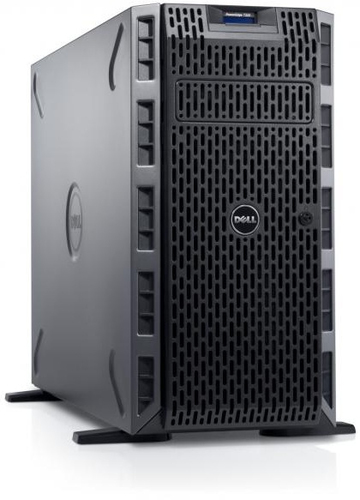
DELL PowerEdge T320 server Tower (5U)
Intel Xeon E5 Family E5-2407 2.2 GHz 750 W

DELL PowerEdge M910 server
146 GB Blade Intel Xeon 6000 Sequence E6510 1.73 GHz 16 GB DDR3-SDRAM