
ASUS TUF X299 MARK 1 Intel X299 LGA 2066 (Socket R4) ATX
- Socket: LGA 2066 (Socket R4)
- Chipset: Intel X299
- Form factor: ATX
- Memory: 8 × DDR4-SDRAM, up to 128 GB
- Storage: 2 × M.2, 8 × SATA III
- Network: Gigabit Ethernet
Where to buy
We're not tracking prices for this product yet. Check current prices directly at:
We may earn a commission when you buy through links on this page — at no extra cost to you. Learn more
About this product
Unconditionally Tough.
24/7 Reliability.
TUF X299 Mark 1 is the durable ATX motherboard made for enthusiasts, modders and gamers who demand reliable performance day in, day out. It's engineered with Industry-leading cooling controls and temperature monitoring, enabling you to build a system that's efficiently cooled and supremely stable. Some of the world's most respected independent testing laboratories have certified TUF components as fit for military use. Every board is subjected to rigorous testing and validation procedures, including warp and drop tests — so you know that TUF X299 Mark 1 will stand up to whatever you throw at it. In fact, we're so confident of the reliability and durability of our products that each and every TUF motherboard is backed by a five-year warranty!
Thermal Armor and M.2 heatsink
Totally cool, across the board.
TUF X299 Mark 1 has been carefully designed to boost airflow and heat dissipation to keep the temperature of vital components as cool as can be. TUF Thermal Armor puts a fan in the PCH area that directs airflow towards an ultra-efficient M.2 heatsink, slashing SSD temperatures by up to 25°C — and that means optimal storage performance and improved drive longevity.
Instant fan tuning, complete system cooling
Our Thermal Radar 3 software allows you to control connected chassis fans, water pumps, AIOs, and even the fans of ASUS graphics cards — all to provide ultimate cooling performance for gaming and productivity. Multiple onboard sensors also enable the temperatures of key components to be monitored in real time, so you can assess and optimize cooling efficiency.
Make your memory go faster
ASUS T-Topology allows memory frequencies that are higher than ever — to 4133MHz and beyond. ASUS-exclusive T-Topology circuit design provides superb memory-overclocking capability to unleash the full power of DDR4 by minimizing coupling noise and signal reflection. Refined manufacturing ensures ultra-consistent quality, minimal crosstalk between custom trace paths, and time-aligned signaling for superior stability and compatibility.
Aura SyncASUS AURA Synce
A well-tuned enthusiast system deserves a matching aesthetic. ASUS Aura Sync offers full RGB lighting control with a variety of functional presets for the built-in RGB LEDs, as well as the LED strips connected to the onboard 4-pin RGB headers* — all easily synced with an ever-growing portfolio of Aura-capable ASUS hardware.
Intel X299 chipset
The Intel X299 chipset supports LGA 2066-socket Intel Core X-series processors. It provides improved performance by utilizing serial point-to-point links, allowing increased bandwidth and stability. Additionally, X299 provides a maximum 10 USB 3.1 Gen 1 ports, 8 SATA 6Gbps ports and 32Gbps M.2 support for faster data retrieval.
Intel Core X-series processors for LGA 2066 socket
Intel Core X-series processors (6-core and above): 4-channel (8-DIMM), 44/28 PCI Express 3.0/2.0 lanes. Intel Core X-series processors (4 core): 2-channel (4-DIMM), 16 PCI Express 3.0/2.0 lanes.
Documents
- ManualUser manual ↗
Specifications
Key specifications
- Processor socketMechanical component(s) that provides mechanical and electrical connections between a microprocessor and a printed circuit board (PCB). This allows the processor to be replaced without soldering.
- LGA 2066 (Socket R4)
- Motherboard chipsetThe chipset connects the microprocessor to the rest of the motherboard.
- Intel X299
- Motherboard chipset familyThe category of motherboard chipset e.g. Intel, AMD.
- Intel
- Motherboard form factorDesign of the motherboard (ATX, BTX etc).
- ATX
- Number of memory slotsThe total number of available sockets for installing memory modules.
- 8
- Supported memory typesTypes of memory which can be used with the product.
- DDR4-SDRAM
- Maximum internal memoryThe maximum amount of memory inside a product, usually measured in bytes e.g megabytes (MB) or gigabytes (GB).
- 128 GB
- Number of M.2 (M) slotsThe total number of available M.2 M-key slots for installing high-speed storage devices or expansion cards.
- 2
- Number of SATA III connectorsSerial ATA (Advanced Technology Attachment) (SATA) is a computer bus interface that connects host bus adapters to mass storage devices such as hard disk drives and optical drives. SATA III (revision 3.x) interface, formally known as SATA 6Gb/s, is a third generation SATA interface running at 6.0Gb/s. The bandwidth throughput, which is supported by the interface, is up to 600MB/s. This interface i…
- 8
- Ethernet interface typeThe maximum data transfer rate supported by the network port, expressed in gigabits per second (e.g., 10 Gigabit Ethernet).
- Gigabit Ethernet
Show all 48 specificationsShow key specifications only
Features
- Component forWhat this product is used as a part of (component for).
- PC
- Motherboard form factorDesign of the motherboard (ATX, BTX etc).
- ATX
- Motherboard chipset familyThe category of motherboard chipset e.g. Intel, AMD.
- Intel
- Windows operating systems supportedWindows vesions wich can be used with the device.
- Windows 10
Memory
- Supported memory typesTypes of memory which can be used with the product.
- DDR4-SDRAM
- Number of memory slotsThe total number of available sockets for installing memory modules.
- 8
- Memory slots typeA memory slot, also known as a memory socket or RAM slot, is what allows computer memory (RAM) to be inserted into the computer. Depending on the motherboard, there will usually be 2 to 4 memory slots (sometimes more on high-end motherboards). The most common types of RAM are SDRAM and DDR for desktop computers and SODIMM for laptop computers, each having various types and speeds.
- DIMM
- ECC сompatibilitySpecifies whether the product supports Error Correction Code (ECC) memory, which detects and fixes data corruption (e.g., ECC, non-ECC).
- Non-ECC
- Supported memory clock speedsMemory clock speed is the time it takes for a computer to complete basic operations. It refers to the computer's processing speed and is measured in hertz. It is however not such a reliable measure of a computer's speed as it doesn't take into account other factors like RAM and cache size.
- 2133,2400,2666,3600,4000 MHz
- Maximum internal memoryThe maximum amount of memory inside a product, usually measured in bytes e.g megabytes (MB) or gigabytes (GB).
- 128 GB
- Unbuffered memoryIndicates whether the device supports the use of unbuffered memory modules.
- Yes
Processor
- Processor manufacturerThe manufacturer that produced the processor.
- Intel
- Processor socketMechanical component(s) that provides mechanical and electrical connections between a microprocessor and a printed circuit board (PCB). This allows the processor to be replaced without soldering.
- LGA 2066 (Socket R4)
- Compatible processor seriesA processor which is compatible with this device, belongs to a 'series' which is part of 'family' e.g Celeron D, Celeron G, Celeron M, or, in some cases, is the same as 'family'.
- Intel Core i7
Packaging content
- ManualIndicates whether a printed user manual is included in the package.
- Yes
Weight & dimensions
- WidthThe measurement or extent of something from side to side.
- 305 mm
- DepthThe distance from the front to the back of something.
- 244 mm
BIOS
- BIOS typeThe BIOS (Basic Input/Output System) initializes and tests system hardware components, and loads a bootloader or an operating system from a mass memory device. The BIOS additionally provides abstraction layer for the hardware, i.e. a consistent way for application programs and operating systems to interact with the keyboard, display, and other input/output devices. There are several types of BIOS…
- UEFI AMI
- BIOS memory sizeThe total storage capacity of the basic input/output system chip, measured in Mbit.
- 128 Mbit
- ACPI versionThe version of the Advanced Configuration and Power Interface standard supported by the device to manage power consumption and hardware configuration (e.g., 2.0).
- 6.0
- Clear CMOS jumperIndicates whether the product features a physical jumper to reset the CMOS settings to their factory defaults.
- Yes
Expansion slots
- Number of M.2 (M) slotsThe total number of available M.2 M-key slots for installing high-speed storage devices or expansion cards.
- 2
Performance
- Motherboard chipsetThe chipset connects the microprocessor to the rest of the motherboard.
- Intel X299
- Audio output channelsAn audio output channel is an electric circuit which acts as a path for a signal produced by a device. A device may have several audio output channels.
- 7.1 channels
- Ethernet interface typeThe maximum data transfer rate supported by the network port, expressed in gigabits per second (e.g., 10 Gigabit Ethernet).
- Gigabit Ethernet
Power
- Power source typeWhat the power source is.
- ATX
Network
- Ethernet LANAn Ethernet LAN (Local Area Network) interface is present, for a wired conection via a cable.
- Yes
- LAN controllerThe specific hardware chip or chipset that manages the network interface and handles data transmission (e.g. Intel I219-V).
- Intel I211, Intel I219V
Ports & interfaces
- USB 2.0 ports quantityNumber of USB 2.0 ports (connecting interfaces) in the device. USB 2.0 was released in April 2000 (now called "Hi-Speed"), adding higher maximum signaling rate of 480 Mbit/s (effective throughput up to 35 MB/s or 280 Mbit/s), USB 2.0 ports are usually black.
- 4
- USB 3.2 Gen 1 (3.1 Gen 1) Type-A ports quantityThe total number of available USB 3.2 Gen 1 (formerly 3.1 Gen 1) Type-A connection ports on the device.
- 4
- USB 3.2 Gen 2 (3.1 Gen 2) Type-A ports quantityThe total number of USB Type-A ports that support the 3.2 Gen 2 (formerly 3.1 Gen 2) standard for high-speed data transfer.
- 1
- USB 3.2 Gen 2 (3.1 Gen 2) Type-C ports quantityNumber of USB 3.1 (3.1 Gen 2) ports with Type-C connector. USB 3.1 (3.1 Gen 2) is USB interface version which supports transfer rate up to 10 Gbit/s (SuperSpeed+). USB Type-C connector has symmetrical design architecture and compatible with Thunderbolt 3 interface.
- 1
- Ethernet LAN (RJ-45) portsNumber of Ethernet LAN (RJ-45) ports (connecting interfaces) in the device. Ethernet LAN (RJ-45) ports allow a computer to connect to the ethernet.
- 2
- Headphone outputsNumber of sockets /ports where headphones are connected.
- 1
- Microphone inThe socket where a microphone is connected to the device.
- Yes
- S/PDIF out portS/PDIF (Sony/Philips Digital Interconnect Format) is a digital audio interconnect used in consumer audio equipment over relatively short distances. The signal is transmitted over either a coaxial cable with RCA connectors or a fibre optic cable with TOSLINK connectors.
- Yes
- Number of SATA III connectorsSerial ATA (Advanced Technology Attachment) (SATA) is a computer bus interface that connects host bus adapters to mass storage devices such as hard disk drives and optical drives. SATA III (revision 3.x) interface, formally known as SATA 6Gb/s, is a third generation SATA interface running at 6.0Gb/s. The bandwidth throughput, which is supported by the interface, is up to 600MB/s. This interface i…
- 8
Internal I/O
- USB 2.0 connectorsThe end of a cable with a USB 2.0 connector. USB 2.0 was released in April 2000 (now called "Hi-Speed"), adding higher maximum signaling rate of 480 Mbit/s (effective throughput up to 35 MB/s or 280 Mbit/s), in addition to the "USB 1.x Full Speed" signaling rate of 12 Mbit/s. USB 2.0 connectors are usually colored black.
- 1
- USB 3.2 Gen 1 (3.1 Gen 1) connectorsThis is a connector (normally attached to a cable) for USB 3.0. USB 3.0 is the second major revision of the Universal Serial Bus (USB) standard for computer connectivity. First introduced in 2008, USB 3.0 adds a new transfer mode called "SuperSpeed," (distinguishable from USB 2.0 by either the blue colour of the port or the initials SS) capable of transferring data at up to 5Gbit/s—more than ten…
- 2
- USB 3.2 Gen 2 (3.1 Gen 2) connectorsThe total number of internal or external ports supporting the USB 3.2 Gen 2 (3.1 Gen 2) standard for high-speed data transfer.
- 1
- Number of EATX power connectorsThe total number of extended ATX (EATX) power sockets available on the product for additional power delivery.
- 1
- CPU fan connectorIndicates whether the product has a dedicated header for connecting a CPU cooling fan.
- Yes
- Number of chassis fan connectorsThe total number of internal headers available to connect case cooling fans (e.g. 3 or 4).
- 5
- Number of COM connectorsThe total number of serial communication ports available on the device (e.g. 2).
- 1
- TPM connectorIndicates whether the product features a dedicated header for connecting a Trusted Platform Module (TPM) security chip.
- Yes
- Thunderbolt headersThe number of internal connection points available on the board to attach an optional Thunderbolt expansion card.
- 1
Storage
- RAID levelsRAID is a storage technology that combines multiple disk drive components into a logical unit for the purposes of data redundancy and performance improvement. Data is distributed across the drives in one of several ways, referred to as RAID levels, depending on the specific level of redundancy and performance required.
- 0, 1, 5, 10
Logistics data
- Harmonized System (HS) codeThe standardized numerical method of classifying traded products used by customs authorities around the world to identify goods for tariffs and statistics.
- 84733020
Database Right data-sheet 2026 Icecat. All rights reserved. Provided “as is”, without warranty — check details with the store before buying.
Price history (90 days, best daily price)
Price history is still being collected for this product — check back soon.
Alternative models

ASUS TUF X299 MARK 2
Intel X299 LGA 2066 (Socket R4) ATX

ASUS ROG STRIX X370-F GAMING
AMD X370 Socket AM4 ATX

ASUS PRIME X299-DELUXE
Intel X299 LGA 2066 (Socket R4) ATX
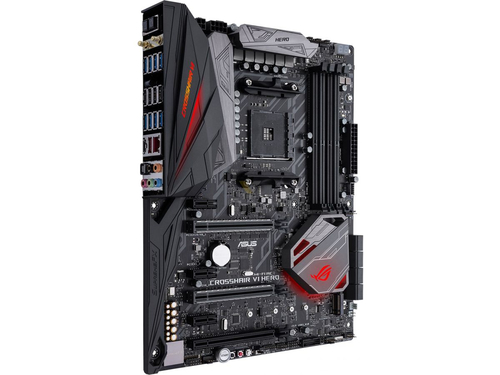
ASUS ROG CROSSHAIR VI HERO (WI-FI AC)
AMD X370 Socket AM4 ATX

ASUS PRIME X299-A
Intel X299 LGA 2066 (Socket R4) ATX

ASUS P10S-M-DC
Intel C232 LGA 1151 (Socket H4) micro ATX