
ASUS ROG MAXIMUS XI CODE Intel Z390 LGA 1151 (Socket H4) ATX
- Socket: LGA 1151 (Socket H4)
- Chipset: Intel Z390
- Form factor: ATX
- Memory: 4 × DDR4-SDRAM, up to 64 GB
- Storage: 2 × M.2, 6 × SATA III
- Network: Fast Ethernet, Gigabit Ethernet
Where to buy
We're not tracking prices for this product yet. Check current prices directly at:
We may earn a commission when you buy through links on this page — at no extra cost to you. Learn more
About this product
Intel Z390 ATX Gaming motherboard with M.2 heatsink, Aura Sync RGB LED, DDR4 4400MHz, 802.11ac Wi-Fi , dual M.2, SATA 6Gb/s, and USB 3.1 Gen 2
THE CODE
Inspired by the rich heritage that has bound the Republic of Gamers to the world of gaming, ROG Maximus XI Code brings together the finest in ROG engineering in understated form that offers all the expansion and personalization opportunities needed to create a distinctive custom rig.
THRILLING PERFORMANCE
With a dedicated onboard clock generator, support for the latest high-performance memory, and cooling options to keep thermals under tight control, Code provides a potent foundation for your next gaming build.
POWER PERFORMANCE
BUILT FOR OVERCLOCKING
By default, all of Coffee Lake's major bus frequencies are derived from the same reference clock, limiting the control and flexibility needed to harness the full overclocking potential of the platform. ROG Maximus XI Code features a dedicated onboard clock generator that supplies dynamic reference clocks to the CPU cores and major subdomains, giving you the freedom to coax every MHz of headroom from the system.
DDR4 4400MHZ+
Whether you're gunning for high memory frequencies or tuning timings for the lowest latency, ROG Maximus XI Code provides the tools you need to exploit the Coffee Lake architecture's full potential: carefully optimized trace pathways maintain signal integrity, and the acclaimed ROG firmware offers the necessary tweaks to ensure stability while maximizing memory performance. Load up with a high-density memory kit for heavy multitasking, or run a focused setup that delivers the bandwidth your favorite games and applications need. Any way you stack it, the Code has you covered.
OPTIMEM II
To provide Intel's latest CPUs unfettered access to memory bandwidth, we've reimagined motherboard trace routing from the ground up. Our OptiMem II tech carefully maps memory signal pathways across different PCB layers to reduce vias and also adds shielding zones that significantly reduce crosstalk. And to further enhance overclocking headroom for fully stacked memory configurations, we've employed a highly customized T-Topology layout that delivers time-aligned signaling.
COOLING DESIGN
COOLER BY DESIGN
COMPREHENSIVE COOLING ZONE
ROG Maximus XI Code features the most comprehensive cooling controls ever, configurable via Fan Xpert 4 or the UEFI BIOS.
Multiple temperature sources
Each header can be set to monitor and react to three user-configurable thermal sensors, for workload based cooling. All easily managed by Fan Xpert 4 or UEFI.
Water pump+
A dedicated header that can supply over 3A to high-performance PWM or DC water pumps.
4-pin PWM/DC fan
Every onboard header supports auto-detection of PWM or DC fans.
*W_PUMP+ and AIO PUMP are also PWM/DC controllable.
Fan Extension Header
Allows expansion of three additional DC or PWM fan headers, plus three thermal-probe headers.
Smart protection
A dedicated integrated circuit that protects each fan header from over-temperature and over-current.
Water in/out
Allows for monitoring of temperature at the input/out of any component.
Water flow
Allows for constant monitoring of the flow rate of entire loop
AIO pump
An All-In-One header that supports auto-detection of PWM, DC fans and water pumps.
CONTROL YOUR RIG
Fast, intuitive control is vital for effective command of your rig, so we've loaded ROG Maximus XI Code with simple, flexible tools that let you tweak almost every system aspect. Enjoy intelligent automated tuning with 5-Way Optimization technology, or dive deep into the revered ROG UEFI BIOS to take full manual control. Code also makes short work of fine-tuning everything from audio to storage, so it's easy to get every park of your system up to speed.
INTELLIGENT CONTROL
AI OVERCLOCKING
ASUS AI Overclocking makes automatic tuning faster and smarter than ever before. Available in Windows or directly through the UEFI, it profiles the CPU and cooling to predict the optimal configuration for each individual system.
CPU POTENTIAL
We created a proprietary algorithm that evaluates the capabilities of your CPU.
COOLING CAPABILITY
The onboard intelligence also watches system vitals like temperatures, fan speeds, and power draw to gauge cooling performance.
AI OVERCLOCKING
Utilizes onboard intelligence to perform automated clocking and provides target frequency and voltage estimations for savvy veterans that prefer manual tuning.
5-WAY OPTIMIZATION
Take care of complex tuning with just one click. ASUS 5-Way Optimization is a system-wide tuning utility that overclocks the processor and tunes fan speeds to ensure the best balance between cooling and acoustics. The automated CPU tuning feature of 5-Way Optimization leverages the same onboard intelligence as AI Overclocking,but goes further by running a Prime95 based stress test to deliver a result that's well-tuned from the get-go.
TPU INSIGHT
The TurboV Processing Unit (TPU) Insight provides AI Suite 3 with the intelligence needed to automatically fine-tune voltages, monitor system stats, and adjust overclocking.
EPU Guidance
The Energy Processing Unit (EPU) Guidance enables system-wide power efficiency, automatically optimizing consumption to maximize savings.
Fan Xpert 4
Enjoy comprehensive control over fans, water pumps and all-in-one (AIO) coolers, via either Fan Expert 4 or our award-winning UEFI.
Digital Power Controls
The Digi+ voltage-regulator module (VRM) delivers real-time control over voltage droop, switching frequency and power-efficiency settings, allowing you to fine-tune CPU voltage regulation for ultimate stability and performance.
Game Faster, Rank Higher
Intel's processors feature per-core tuning, and the ASUS Turbo app makes use of this feature by letting you assign applications to specific processor cores, prioritizing computing power where it's needed most.
Documents
- ManualUser manual ↗
Specifications
Key specifications
- Processor socketMechanical component(s) that provides mechanical and electrical connections between a microprocessor and a printed circuit board (PCB). This allows the processor to be replaced without soldering.
- LGA 1151 (Socket H4)
- Motherboard chipsetThe chipset connects the microprocessor to the rest of the motherboard.
- Intel Z390
- Motherboard chipset familyThe category of motherboard chipset e.g. Intel, AMD.
- Intel
- Motherboard form factorDesign of the motherboard (ATX, BTX etc).
- ATX
- Number of memory slotsThe total number of available sockets for installing memory modules.
- 4
- Supported memory typesTypes of memory which can be used with the product.
- DDR4-SDRAM
- Maximum internal memoryThe maximum amount of memory inside a product, usually measured in bytes e.g megabytes (MB) or gigabytes (GB).
- 64 GB
- Number of M.2 (M) slotsThe total number of available M.2 M-key slots for installing high-speed storage devices or expansion cards.
- 2
- Number of SATA III connectorsSerial ATA (Advanced Technology Attachment) (SATA) is a computer bus interface that connects host bus adapters to mass storage devices such as hard disk drives and optical drives. SATA III (revision 3.x) interface, formally known as SATA 6Gb/s, is a third generation SATA interface running at 6.0Gb/s. The bandwidth throughput, which is supported by the interface, is up to 600MB/s. This interface i…
- 6
- Ethernet interface typeThe maximum data transfer rate supported by the network port, expressed in gigabits per second (e.g., 10 Gigabit Ethernet).
- Fast Ethernet, Gigabit Ethernet
Show all 52 specificationsShow key specifications only
Features
- Component forWhat this product is used as a part of (component for).
- PC
- Motherboard form factorDesign of the motherboard (ATX, BTX etc).
- ATX
- Motherboard chipset familyThe category of motherboard chipset e.g. Intel, AMD.
- Intel
- Windows operating systems supportedWindows vesions wich can be used with the device.
- Windows 10, Windows 10 Education, Windows 10 Education x64, Windows 10 Enterprise, Windows 10 Enterprise x64, Windows 10 Home, Windows 10 Home x64, Windows 10 IOT Core, Windows 10 Pro, Windows 10 Pro x64
Memory
- Supported memory typesTypes of memory which can be used with the product.
- DDR4-SDRAM
- Number of memory slotsThe total number of available sockets for installing memory modules.
- 4
- Memory slots typeA memory slot, also known as a memory socket or RAM slot, is what allows computer memory (RAM) to be inserted into the computer. Depending on the motherboard, there will usually be 2 to 4 memory slots (sometimes more on high-end motherboards). The most common types of RAM are SDRAM and DDR for desktop computers and SODIMM for laptop computers, each having various types and speeds.
- DIMM
- Memory channelsThe number of communication paths between the memory controller and the RAM, which affects data transfer bandwidth (e.g., Dual-channel).
- Dual-channel
- ECC сompatibilitySpecifies whether the product supports Error Correction Code (ECC) memory, which detects and fixes data corruption (e.g., ECC, non-ECC).
- Non-ECC
- Supported memory clock speedsMemory clock speed is the time it takes for a computer to complete basic operations. It refers to the computer's processing speed and is measured in hertz. It is however not such a reliable measure of a computer's speed as it doesn't take into account other factors like RAM and cache size.
- 2133,2400,2666,2800,3000,3200,3300,3333,3400,3466,3600,3733,3866,4000,4133,4266,4400 MHz
- Maximum internal memoryThe maximum amount of memory inside a product, usually measured in bytes e.g megabytes (MB) or gigabytes (GB).
- 64 GB
- Unbuffered memoryIndicates whether the device supports the use of unbuffered memory modules.
- Yes
Processor
- Processor manufacturerThe manufacturer that produced the processor.
- Intel
- Processor socketMechanical component(s) that provides mechanical and electrical connections between a microprocessor and a printed circuit board (PCB). This allows the processor to be replaced without soldering.
- LGA 1151 (Socket H4)
- Compatible processor seriesA processor which is compatible with this device, belongs to a 'series' which is part of 'family' e.g Celeron D, Celeron G, Celeron M, or, in some cases, is the same as 'family'.
- Intel Celeron, Intel Pentium
- Parallel processing technology supportParallel processing technology is the simultaneous use of more than one CPU or processor core to execute a program or multiple computational threads. Ideally, parallel processing makes programs run faster because there are more engines (CPUs or Cores) running it. In practice, it is often difficult to divide a program in such a way that separate CPUs or cores can execute different portions without…
- 2-Way SLI, 3-Way CrossFireX
- Intel Core i3/i5/i7/i9 seriesThe specific generation or series of Intel Core processors supported by the product (e.g., i3-8xxx).
- i3-8xxx, i5-8xxx, i7-8xxx
Weight & dimensions
- WidthThe measurement or extent of something from side to side.
- 305 mm
- DepthThe distance from the front to the back of something.
- 244 mm
Processor special features
- Intel Optane Memory ReadyIndicates whether the system supports Intel Optane persistent memory modules to expand the available system memory capacity.
- Yes
BIOS
- BIOS typeThe BIOS (Basic Input/Output System) initializes and tests system hardware components, and loads a bootloader or an operating system from a mass memory device. The BIOS additionally provides abstraction layer for the hardware, i.e. a consistent way for application programs and operating systems to interact with the keyboard, display, and other input/output devices. There are several types of BIOS…
- UEFI AMI
- BIOS memory sizeThe total storage capacity of the basic input/output system chip, measured in Mbit.
- 16 Mbit
- ACPI versionThe version of the Advanced Configuration and Power Interface standard supported by the device to manage power consumption and hardware configuration (e.g., 2.0).
- 6.1
- Clear CMOS buttonIndicates whether the device features a dedicated external button to reset the CMOS settings to their factory defaults.
- Yes
Expansion slots
- PCI Express x16 (Gen 3.x) slotsPlaces where PCI Express x16 (Gen 3.x) are placed inside and connected to the computer motherboard.
- 4
- Number of M.2 (M) slotsThe total number of available M.2 M-key slots for installing high-speed storage devices or expansion cards.
- 2
Performance
- Motherboard chipsetThe chipset connects the microprocessor to the rest of the motherboard.
- Intel Z390
- Audio output channelsAn audio output channel is an electric circuit which acts as a path for a signal produced by a device. A device may have several audio output channels.
- 7.1 channels
- Ethernet interface typeThe maximum data transfer rate supported by the network port, expressed in gigabits per second (e.g., 10 Gigabit Ethernet).
- Fast Ethernet, Gigabit Ethernet
Network
- Ethernet LANAn Ethernet LAN (Local Area Network) interface is present, for a wired conection via a cable.
- Yes
- LAN controllerThe specific hardware chip or chipset that manages the network interface and handles data transmission (e.g. Intel I219-V).
- Intel I219-V
- Wi-FiPopular technology that allows an electronic device to exchange data or connect to the internet wirelessly using radio waves.
- Yes
- Wi-Fi standardsThe type of wireless local area network (LAN). It can be ad-hoc, where units in a network communicate peer-to-peer, or Infrastructure, where units communicate with each other via an access point A LAN interconnects computers in a small area e.g. home, school or office.
- Wi-Fi 5 (802.11ac), 802.11b, 802.11g, Wi-Fi 4 (802.11n)
- BluetoothBluetooth is a low-power radio technology developed to replace the cables and wires currently used to link or connect electronic devices such as personal computers, printers, and a wide variety of handheld devices including mobile phones. Because it uses radio-wave connectivity, a Bluetooth-enabled device has a constant, established connection to whatever browser it uses. This saves the user the…
- Yes
- Bluetooth versionThe type of bluetooth technology in the product e.g. Bluetooth Smart (v4.0).
- 5.0
Ports & interfaces
- USB 3.2 Gen 1 (3.1 Gen 1) Type-A ports quantityThe total number of available USB 3.2 Gen 1 (formerly 3.1 Gen 1) Type-A connection ports on the device.
- 6
- USB 3.2 Gen 2 (3.1 Gen 2) Type-A ports quantityThe total number of USB Type-A ports that support the 3.2 Gen 2 (formerly 3.1 Gen 2) standard for high-speed data transfer.
- 3
- USB 3.2 Gen 2 (3.1 Gen 2) Type-C ports quantityNumber of USB 3.1 (3.1 Gen 2) ports with Type-C connector. USB 3.1 (3.1 Gen 2) is USB interface version which supports transfer rate up to 10 Gbit/s (SuperSpeed+). USB Type-C connector has symmetrical design architecture and compatible with Thunderbolt 3 interface.
- 1
- Ethernet LAN (RJ-45) portsNumber of Ethernet LAN (RJ-45) ports (connecting interfaces) in the device. Ethernet LAN (RJ-45) ports allow a computer to connect to the ethernet.
- 1
- HDMI ports quantityThe number of sockets (ports) for HDMI connections. HDMI (High-Definition Multimedia Interface) is a compact audio/video interface for transferring uncompressed video data and compressed/uncompressed digital audio data from a HDMI-compliant device ("the source device") to a compatible computer monitor, video projector, digital television, or digital audio device. HDMI is a digital replacement for…
- 1
- Microphone inThe socket where a microphone is connected to the device.
- Yes
- S/PDIF out portS/PDIF (Sony/Philips Digital Interconnect Format) is a digital audio interconnect used in consumer audio equipment over relatively short distances. The signal is transmitted over either a coaxial cable with RCA connectors or a fibre optic cable with TOSLINK connectors.
- Yes
- Number of SATA III connectorsSerial ATA (Advanced Technology Attachment) (SATA) is a computer bus interface that connects host bus adapters to mass storage devices such as hard disk drives and optical drives. SATA III (revision 3.x) interface, formally known as SATA 6Gb/s, is a third generation SATA interface running at 6.0Gb/s. The bandwidth throughput, which is supported by the interface, is up to 600MB/s. This interface i…
- 6
Internal I/O
- USB 2.0 connectorsThe end of a cable with a USB 2.0 connector. USB 2.0 was released in April 2000 (now called "Hi-Speed"), adding higher maximum signaling rate of 480 Mbit/s (effective throughput up to 35 MB/s or 280 Mbit/s), in addition to the "USB 1.x Full Speed" signaling rate of 12 Mbit/s. USB 2.0 connectors are usually colored black.
- 3
- USB 3.2 Gen 1 (3.1 Gen 1) connectorsThis is a connector (normally attached to a cable) for USB 3.0. USB 3.0 is the second major revision of the Universal Serial Bus (USB) standard for computer connectivity. First introduced in 2008, USB 3.0 adds a new transfer mode called "SuperSpeed," (distinguishable from USB 2.0 by either the blue colour of the port or the initials SS) capable of transferring data at up to 5Gbit/s—more than ten…
- 2
- USB 3.2 Gen 2 (3.1 Gen 2) connectorsThe total number of internal or external ports supporting the USB 3.2 Gen 2 (3.1 Gen 2) standard for high-speed data transfer.
- 1
- Front panel audio connectorIndicates whether the product has a dedicated header to connect audio jacks located on the front panel of a chassis.
- Yes
- Number of EATX power connectorsThe total number of extended ATX (EATX) power sockets available on the product for additional power delivery.
- 3
- CPU fan connectorIndicates whether the product has a dedicated header for connecting a CPU cooling fan.
- Yes
- Number of chassis fan connectorsThe total number of internal headers available to connect case cooling fans (e.g. 3 or 4).
- 1
Printing
- Maximum resolutionMaximum printing resolution.
- 4096 x 2160 pixels
Storage
- Supported storage drive interfacesThe physical and logical connection standards supported for connecting storage drives to the system (e.g., M.2 or SATA).
- M.2, SATA III
Database Right data-sheet 2026 Icecat. All rights reserved. Provided “as is”, without warranty — check details with the store before buying.
Expert reviews
- –
overclockers.com2018
October 8th was the release date for some embargos for the new Z390 chipset. And with this date coming and going we saw the major board partners show off most/all of their new lineups. With this brings new naming conventions, new looks, and new features o...
Read the review at overclockers.com ↗
Price history (90 days, best daily price)
Price history is still being collected for this product — check back soon.
Alternative models

ASUS PRIME H310M-A R2.0
Intel H310 LGA 1151 (Socket H4) micro ATX
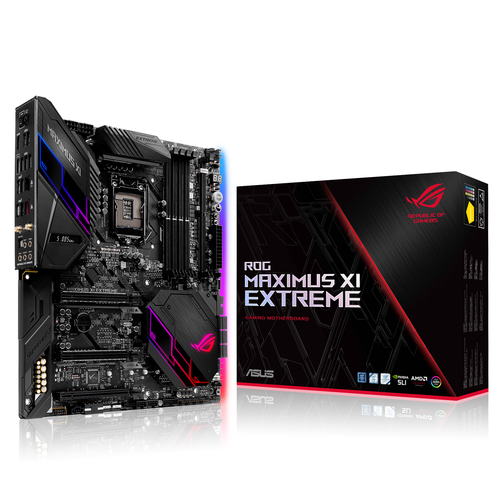
ASUS ROG MAXIMUS XI EXTREME
Intel Z390 LGA 1151 (Socket H4) Extended ATX

ASUS PRIME H310M-D R2.0
Intel H310 LGA 1151 (Socket H4) micro ATX

ASUS ROG STRIX Z390-I GAMING
Intel Z390 LGA 1151 (Socket H4) mini ITX

ASUS PRIME H310M-E R2.0
Intel H310 LGA 1151 (Socket H4) micro ATX

ASUS ROG STRIX Z390-E GAMING
Intel Z390 LGA 1151 (Socket H4) ATX