
ASUS H61M-F Intel H61 LGA 1155 (Socket H2) micro ATX
- Socket: LGA 1155 (Socket H2)
- Chipset: Intel H61
- Form factor: micro ATX
- Network: Gigabit Ethernet
Where to buy
We're not tracking prices for this product yet. Check current prices directly at:
We may earn a commission when you buy through links on this page — at no extra cost to you. Learn more
About this product
Windows 8 Exclusive Features
Fast Boot
Instant OS Login
ASUS has released new hardware and software designs to shorten system boot-up time to 2-seconds for a smoother user experience that removes annoying delays under Windows 8, and even previous versions of Windows. Faster system boot and restart means Windows starts quicker and higher efficiency - No more waiting around.
ASUS Boot Setting
Multi-startup Options
Thanks to ASUS Windows 8 hardware optimization, ASUS Boot Setting provides better flexibility in customizing your PCs startup process. You can enter the BIOS directly with one click through a user-friendly interface, and quickly select your preferred system boot up method: either get to the OS in seconds or opt for regular boot up. Whatever your choice, settings are saved and persistent, with no need to choose every time you power on.
LGA1155 socket for Intel 3rd/2nd Generation Core i7 / Core i5 / Core i3 / Pentium / Celeron Processors
This motherboard supports the Intel 3rd/2nd generation Core i7/i5/i3/Pentium/Celeron processors in the LGA1155 package, with iGPU, memory, and PCI Express controllers integrated to support onboard graphics out with dedicated chipsets, 2-channel (2 DIMMs) DDR3 memory, and 16 PCI Express 3.0/2.0 lanes. This provides great graphics performance. Intel 3rd/2nd generation Core i7/i5/i3/Pentium/Celeron processors are among the most powerful and energy efficient CPUs in the world.
Intel H61 Express Chipset
The Intel H61 Express Chipset is a single-chipset design to support the new 1155 socket Intel 3rd/2nd Generation Core i7 / Core i5 / Core i3 / Pentium / Celeron processors. It provides improved performance by utilizing serial point-to-point links, which allows increased bandwidth and stability.
PCIe 3.0 Ready
The latest PCI Express bus standard delivers improved encoding for twice the performance of current PCIe 2.0. Total bandwidth for a x16 link reaches a maximum of 32GB/s, double the 16GB/s of PCIe 2.0 (in x16 mode). PCIe 3.0 provides users unprecedented data speeds, combined with the convenience and seamless transition offered by complete backward compatibility with PCIe 1.0 and PCIe 2.0 devices. It’s a must-have feature for PC users aiming to improve and optimize graphics performance, as well as have the latest, most future-proof technology.
Dual-Channel DDR3 2200(O.C )/2133(O.C )/2000(O.C ) /1866(O.C )/1600/1333/1066 support
The motherboard supports DDR3 memory that features data transfer rates of 2200(O.C )/2133(O.C )/2000(O.C )/1866(O.C )/1600/1333/1066 suppor MHz to meet the higher bandwidth requirements of the latest 3D graphics, multimedia, and Internet applications. The dual-channel DDR3 architecture enlarges the bandwidth of your system memory to boost system performance
ASUS UEFI BIOS (EZ Mode)
Exclusive to ASUS motherboards, its UEFI (Unified Extensible Firmware Interface) is the first ever mouse-controlled graphical BIOS interface designed with dual selectable modes. It delivers a user-friendly interface that goes beyond traditional keyboard-only BIOS controls to enable more flexible and convenient input with quick scrolling. Users can easily navigate the UEFI BIOS with the smoothness of their operating system. Quick and simple overclocking and setup sharing is facilitated by the F12 hotkey BIOS snapshot feature. The exclusive EZ Mode displays frequently-accessed setup info, while the Advanced Mode is for experienced performance enthusiasts that demand far more intricate system control, including detailed DRAM information.
Supports Hard Drives over 2.2TB
ASUS UEFI BIOS natively supports hard drives larger than 2.2TB in 64-bit, with full storage space utilization helping deliver far more exciting computing than traditional BIOS versions.
Exclusive ASUS Interface
EZ Mode - gives easy access to selectable, optimized system modes, clear system info display and drag and drop boot prioritizing Advanced Mode - for experienced performance enthusiasts that demand intricate system settings
ASUS Exclusive USB 3.0 Boost
1.7x Faster than Traditional USB 3.0
ASUS USB 3.0 Boost supports UASP (USB Attached SCSI Protocol) standard for major time savings when moving large files such as HD videos. It accelerates data transfers by up to 1.7x when compared to normal USB 3.0 speeds, leading the industry in USB 3.0 transmission speeds.
AI Suite II
One stop Access to Innovative ASUS Features
With its user-friendly interface, ASUS AI Suite II consolidates all the exclusive ASUS features into one simple to use software package. It allows users to supervise Overclocking, energy management, fan speed control, voltage and sensor readings. This all-in-one software offers diverse and ease to use functions, with no need to switch back and forth between different utilities.
Fan Xpert
ASUS Fan Xpert intelligently allows you to adjust the CPU and chassis fan speeds according to different ambient temperatures caused by different climate conditions in different geographic regions and your PC’s loading. The built-in variety of useful profiles offer flexible controls of fan speed to achieve a quiet and cool environment.
Network iControl
Real-time Network Bandwidth Control
With a single-click on/off button, the application currently in use has its data and network bandwidth prioritized over other programs. Moreover, you can prioritize your favorite software easily by configuring profiles through the intuitive user interface. Within the profile, programs can be pre-scheduled to run in a specific time period to avoid network congestion and long-waits on downloads. Auto PPPoE network connection provides a one-step setup for enhanced online convenience. Overall, it's an intuitive network bandwidth control center.
ASUS Anti-Surge Protection
Protect Your Device Anti-Surge Protection Design detects overvoltage conditions and prevents voltage surges from spreading in real time. It also actively cuts off the overvoltage supply to protect the system.
Specifications
Key specifications
- Processor socketMechanical component(s) that provides mechanical and electrical connections between a microprocessor and a printed circuit board (PCB). This allows the processor to be replaced without soldering.
- LGA 1155 (Socket H2)
- Motherboard chipsetThe chipset connects the microprocessor to the rest of the motherboard.
- Intel H61
- Motherboard chipset familyThe category of motherboard chipset e.g. Intel, AMD.
- Intel
- Motherboard form factorDesign of the motherboard (ATX, BTX etc).
- micro ATX
- Supported memory typesTypes of memory which can be used with the product.
- DDR3-SDRAM
- Ethernet interface typeThe maximum data transfer rate supported by the network port, expressed in gigabits per second (e.g., 10 Gigabit Ethernet).
- Gigabit Ethernet
Show all 45 specificationsShow key specifications only
Features
- Component forWhat this product is used as a part of (component for).
- PC
- Motherboard form factorDesign of the motherboard (ATX, BTX etc).
- micro ATX
- Motherboard chipset familyThe category of motherboard chipset e.g. Intel, AMD.
- Intel
Memory
- Supported memory typesTypes of memory which can be used with the product.
- DDR3-SDRAM
- Memory slots typeA memory slot, also known as a memory socket or RAM slot, is what allows computer memory (RAM) to be inserted into the computer. Depending on the motherboard, there will usually be 2 to 4 memory slots (sometimes more on high-end motherboards). The most common types of RAM are SDRAM and DDR for desktop computers and SODIMM for laptop computers, each having various types and speeds.
- DIMM
- Memory channelsThe number of communication paths between the memory controller and the RAM, which affects data transfer bandwidth (e.g., Dual-channel).
- Dual-channel
- Supported memory clock speedsMemory clock speed is the time it takes for a computer to complete basic operations. It refers to the computer's processing speed and is measured in hertz. It is however not such a reliable measure of a computer's speed as it doesn't take into account other factors like RAM and cache size.
- 1066,1333,1600,1866,2000,2133,2200 MHz
- Supported memory module capacitiesThe maximum amount of RAM that can be installed per memory slot, such as 128GB or 192GB.
- 4GB, 8GB
- Flash memoryThe total amount of non-volatile storage available for firmware or data, measured in MB.
- 64 MB
Processor
- Processor manufacturerThe manufacturer that produced the processor.
- Intel
- Processor socketMechanical component(s) that provides mechanical and electrical connections between a microprocessor and a printed circuit board (PCB). This allows the processor to be replaced without soldering.
- LGA 1155 (Socket H2)
- Compatible processor seriesA processor which is compatible with this device, belongs to a 'series' which is part of 'family' e.g Celeron D, Celeron G, Celeron M, or, in some cases, is the same as 'family'.
- Intel Celeron, Intel Pentium
- Maximum number of SMP processorsThe highest number of symmetric multiprocessing (SMP) processors that the system can support.
- 1
- Intel Core i3/i5/i7/i9 seriesThe specific generation or series of Intel Core processors supported by the product (e.g., i3-8xxx).
- i3-2xxx, i3-3xxx, i5-2xxx, i5-3xxx, i7-2xxx, i7-3xxx
- Supported processor socketsThe sockets (plugs) for processors that are supported (can be used) by the device.
- LGA 1155 (Socket H2)
Weight & dimensions
- WidthThe measurement or extent of something from side to side.
- 226 mm
- DepthThe distance from the front to the back of something.
- 178 mm
BIOS
- BIOS typeThe BIOS (Basic Input/Output System) initializes and tests system hardware components, and loads a bootloader or an operating system from a mass memory device. The BIOS additionally provides abstraction layer for the hardware, i.e. a consistent way for application programs and operating systems to interact with the keyboard, display, and other input/output devices. There are several types of BIOS…
- UEFI
- ACPI versionThe version of the Advanced Configuration and Power Interface standard supported by the device to manage power consumption and hardware configuration (e.g., 2.0).
- 2.0a
- Clear CMOS jumperIndicates whether the product features a physical jumper to reset the CMOS settings to their factory defaults.
- Yes
Expansion slots
- PCI Express x1 (Gen 2.x) slotsThe number of available PCI Express x1 slots supporting generation 2.x specifications for adding expansion cards.
- 2
- PCI Express x16 (Gen 3.x) slotsPlaces where PCI Express x16 (Gen 3.x) are placed inside and connected to the computer motherboard.
- 1
Performance
- Motherboard chipsetThe chipset connects the microprocessor to the rest of the motherboard.
- Intel H61
- Audio output channelsAn audio output channel is an electric circuit which acts as a path for a signal produced by a device. A device may have several audio output channels.
- 7.1 channels
- Ethernet interface typeThe maximum data transfer rate supported by the network port, expressed in gigabits per second (e.g., 10 Gigabit Ethernet).
- Gigabit Ethernet
Power
- Power source typeWhat the power source is.
- ATX
Network
- Ethernet LANAn Ethernet LAN (Local Area Network) interface is present, for a wired conection via a cable.
- Yes
- LAN controllerThe specific hardware chip or chipset that manages the network interface and handles data transmission (e.g. Intel I219-V).
- Realtek RTL8111F
Ports & interfaces
- USB 2.0 ports quantityNumber of USB 2.0 ports (connecting interfaces) in the device. USB 2.0 was released in April 2000 (now called "Hi-Speed"), adding higher maximum signaling rate of 480 Mbit/s (effective throughput up to 35 MB/s or 280 Mbit/s), USB 2.0 ports are usually black.
- 4
- Ethernet LAN (RJ-45) portsNumber of Ethernet LAN (RJ-45) ports (connecting interfaces) in the device. Ethernet LAN (RJ-45) ports allow a computer to connect to the ethernet.
- 1
- PS/2 ports quantityThe number of PS/2 connectors for keyboards and mice. Its name comes from the IBM Personal System/2.
- 2
- VGA (D-Sub) ports quantityNumber of VGA (D-Sub) ports (connecting interfaces) in the device. The VGA (D-Sub) connector is a 15 pin connector between a computer and a monitor. It was first introduced in 1987 by IBM.
- 1
- DVI-D ports quantityThis is the amount of DVI-I interfaces. Digital Visual Interface (DVI) is a video display interface developed by the Digital Display Working Group (DDWG). The digital interface is used to connect a video source to a display device, such as a computer monitor. DVI-D means DVI digital, which means it can only support digital, but not analog.
- 1
- Headphone outputsNumber of sockets /ports where headphones are connected.
- 1
- Microphone inThe socket where a microphone is connected to the device.
- Yes
Internal I/O
- USB 2.0 connectorsThe end of a cable with a USB 2.0 connector. USB 2.0 was released in April 2000 (now called "Hi-Speed"), adding higher maximum signaling rate of 480 Mbit/s (effective throughput up to 35 MB/s or 280 Mbit/s), in addition to the "USB 1.x Full Speed" signaling rate of 12 Mbit/s. USB 2.0 connectors are usually colored black.
- 1
- USB 3.2 Gen 1 (3.1 Gen 1) connectorsThis is a connector (normally attached to a cable) for USB 3.0. USB 3.0 is the second major revision of the Universal Serial Bus (USB) standard for computer connectivity. First introduced in 2008, USB 3.0 adds a new transfer mode called "SuperSpeed," (distinguishable from USB 2.0 by either the blue colour of the port or the initials SS) capable of transferring data at up to 5Gbit/s—more than ten…
- 1
- Number of SATA II connectorsSerial ATA (Advanced Technology Attachment) (SATA) is a computer bus interface that connects host bus adapters to mass storage devices such as hard disk drives and optical drives. SATA II (revision 2.x) interface, formally known as SATA 3Gb/s, is a second generation SATA interface running at 3.0 Gb/s. The bandwidth throughput, which is supported by the interface, is up to 300MB/s.
- 4
- Number of SATA connectorsThe total number of Serial ATA (SATA) ports available on the unit for connecting storage devices.
- 4
- Front panel audio connectorIndicates whether the product has a dedicated header to connect audio jacks located on the front panel of a chassis.
- Yes
- ATX Power connector (24-pin)Indicates whether the product features a 24-pin ATX power connector for main power supply connectivity.
- Yes
- Number of EATX power connectorsThe total number of extended ATX (EATX) power sockets available on the product for additional power delivery.
- 1
- CPU fan connectorIndicates whether the product has a dedicated header for connecting a CPU cooling fan.
- Yes
- Number of chassis fan connectorsThe total number of internal headers available to connect case cooling fans (e.g. 3 or 4).
- 1
Storage
- Supported storage drive interfacesThe physical and logical connection standards supported for connecting storage drives to the system (e.g., M.2 or SATA).
- SATA II
Database Right data-sheet 2026 Icecat. All rights reserved. Provided “as is”, without warranty — check details with the store before buying.
Price history (90 days, best daily price)
Price history is still being collected for this product — check back soon.
Alternative models

ASUS A88X-PLUS
AMD A88X Socket FM2+ ATX

ASUS H81T
Intel H81 LGA 1150 (Socket H3) mini ITX

ASUS H81M-D
Intel H81 LGA 1150 (Socket H3) micro ATX

ASUS H61M-PRO
Intel H61 LGA 1155 (Socket H2) micro ATX

ASUS H81M-D PLUS
Intel H81 LGA 1150 (Socket H3) micro ATX
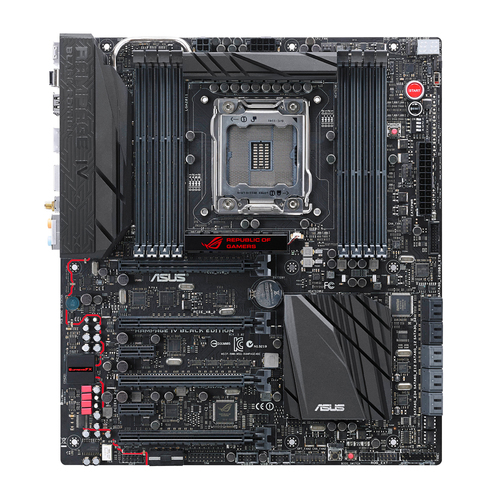
ASUS RAMPAGE IV BLACK EDITION
Intel X79 LGA 2011 (Socket R) Extended ATX